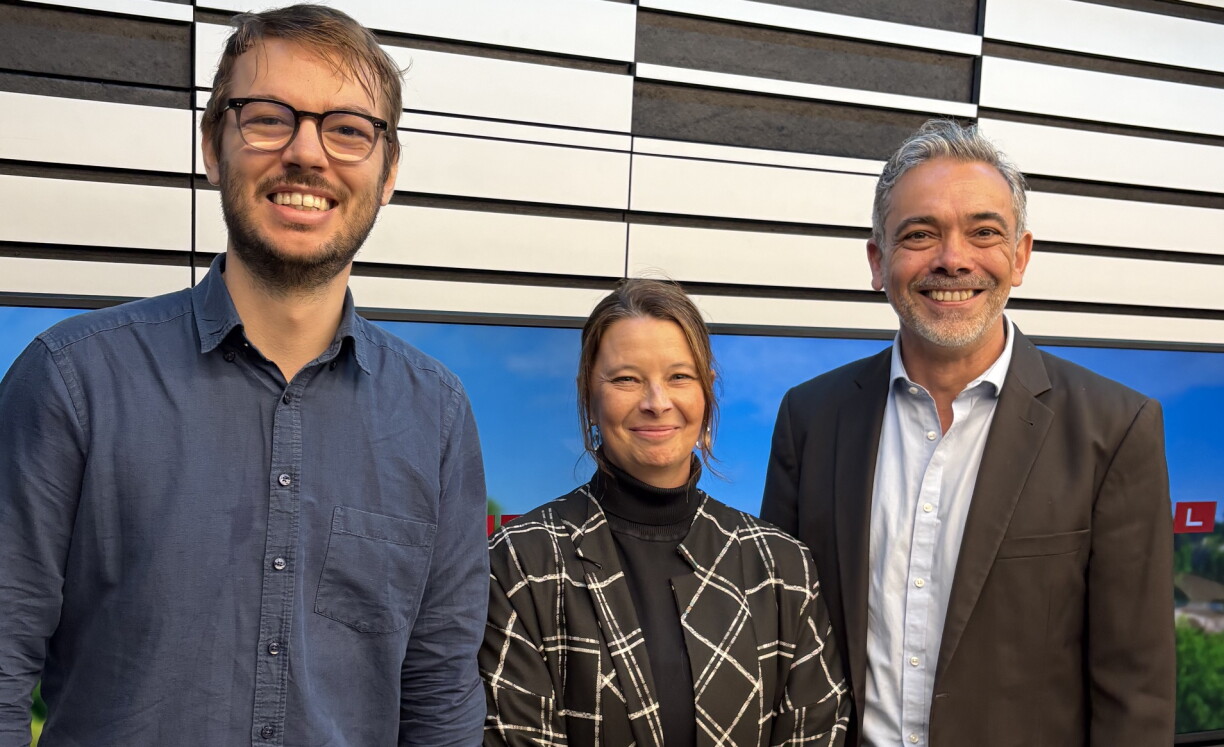
A potential 'blue-red-green' coalition remains a possible outcome in Luxembourg’s next elections, though a renewed Christian Social People’s Party–Democratic Party (CSV-DP) government is also possible, the journalists agreed during Wednesday’s press roundtable on RTL.
With two years still to go before voters head to the polls, the level of compatibility between various political figures remains uncertain.
The discussion, featuring Nadine Schartz (Luxemburger Wort), Armand Back (Tageblatt), and Pol Reuter (Reporter.lu), focused primarily on the findings of the latest Sunday Poll commissioned by RTL and Luxemburger Wort.
Nadine Schartz noted uncertainty over whether some CSV supporters would shift their allegiance to the Alternative Democratic Reform Party (ADR) out of a perception that the CSV is not conservative enough.
She argued that voters are more focused on day-to-day challenges such as finding affordable housing or coping with rising energy and living costs than on ideological questions.
The panel broadly agreed that Prime Minister and CSV party leader Luc Frieden continues to struggle to connect with ordinary people.
While Pol Reuter suggested that Frieden still has time to reinvent his image, Armand Back was more sceptical, as was Schartz, who argued that the government has failed so far to deliver results that people actually feel.
Turning to the ADR’s strong showing in the latest poll, Armand Back pointed out that the party tends to perform poorly in surveys measuring sympathy and perceived competence of politicians.
Pol Reuter added that recent electoral successes for the far-right Alternative for Germany (AfD) across the border could influence voting behaviour in Luxembourg as well.
With regard to the relatively weak result for the Luxembourg Socialist Workers’ Party (LSAP), the journalists attributed this in part to Paulette Lenert’s move to the Council of State, as well as a perception that LSAP too often made the wrong compromises with their coalition partners.
For Déi Gréng (The Greens), the hot and dry summer may have boosted their standing.
The panel also reached consensus that the government’s proposed tax reform is too expensive, especially given the country’s already high level of national debt.
They acknowledged that Finance Minister Gilles Roth’s budget proposal aims to stimulate the economy, which is a necessity for maintaining Luxembourg’s social model, but argued that widespread relief cannot be granted without counterbalancing revenue measures, as this would come at the expense of future generations and the next government.





