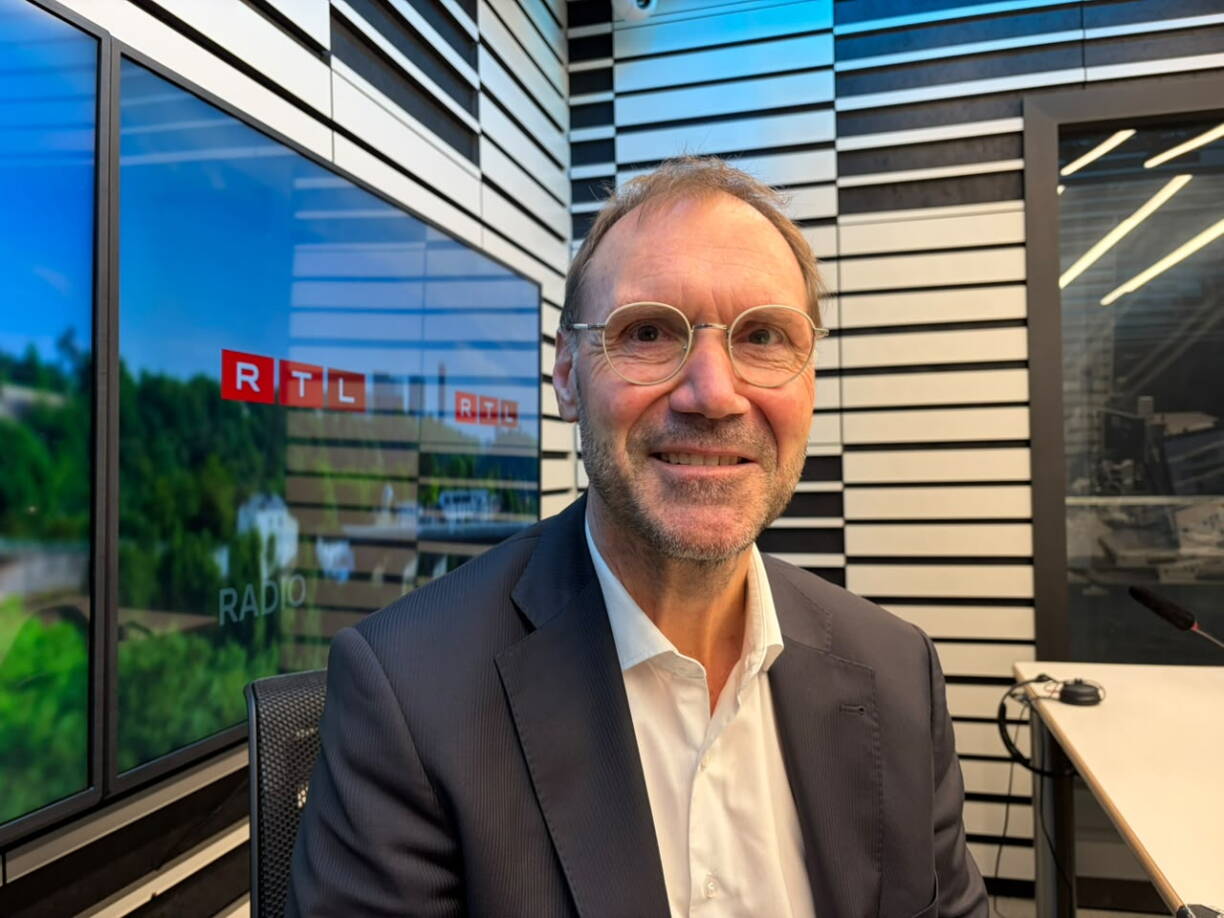
In a Wednesday morning interview with RTL Radio, University of Luxembourg Rector Jens Kreisel reflected on the institution's rapid growth over the past two decades.
"The University of Luxembourg is still young, but it has already achieved a great deal in its 23 years of existence", Kreisel said, noting that it would be difficult to have accomplished more in such a short time. Today, the university boasts more than 7,000 students and 2,800 staff. It offers 26 bachelor’s and 52 master’s programmes taught in four languages, drawing students and professors from 148 countries.
Highlighting interdisciplinarity in both research and academics as a major strength, Kreisel said the university plans to build on this momentum, particularly in the fields of medicine and artificial intelligence. This year, student enrollment rose by 8% – a result the rector described as excellent by international standards.
Despite its rapid growth, Kreisel acknowledged that the university has not yet reached the stature of centuries-old institutions abroad. While a solid foundation has been built, he noted that the 23-year-old university must continue to develop, especially given the fierce international competition to attract top researchers and students.
Kreisel views the university’s relatively small size and youth as its greatest assets, allowing for closer, more individualised student support. In an era dominated by new media and artificial intelligence, he stressed that human contact will become a defining advantage. Addressing the – in his view – "legitimate" question of why physical universities are still necessary when AI can summarise any subject, Kreisel noted that the institution will host a major forum to explore this topic in April.
While Kreisel is convinced that higher education will undergo profound changes over the next five to 10 years, he believes human beings will always retain an edge over AI in empathy and interpersonal connection. Consequently, he expects "soft skills" – such as collaboration, problem-solving, and self-organisation – to become increasingly vital.
The interview also addressed the internal difficulties and operational challenges the university has faced in recent months. Kreisel stated that the administration has taken the criticism seriously, implementing adjustments and new measures in response. He suggested that the university's rapid expansion may have outpaced its internal cohesion, and that staff must now learn to collaborate more effectively. To address this, the university has invested in ongoing professional development for its managers and senior leaders.
Looking ahead, Kreisel announced he will not seek a second term as rector, stepping down at the end of 2027. Describing the move as a personal decision after a decade at the helm, he expressed excitement for the next chapter of his career. He plans to take a sabbatical at a foreign university in 2028 and is considering remaining in Luxembourg for his future professional endeavors.