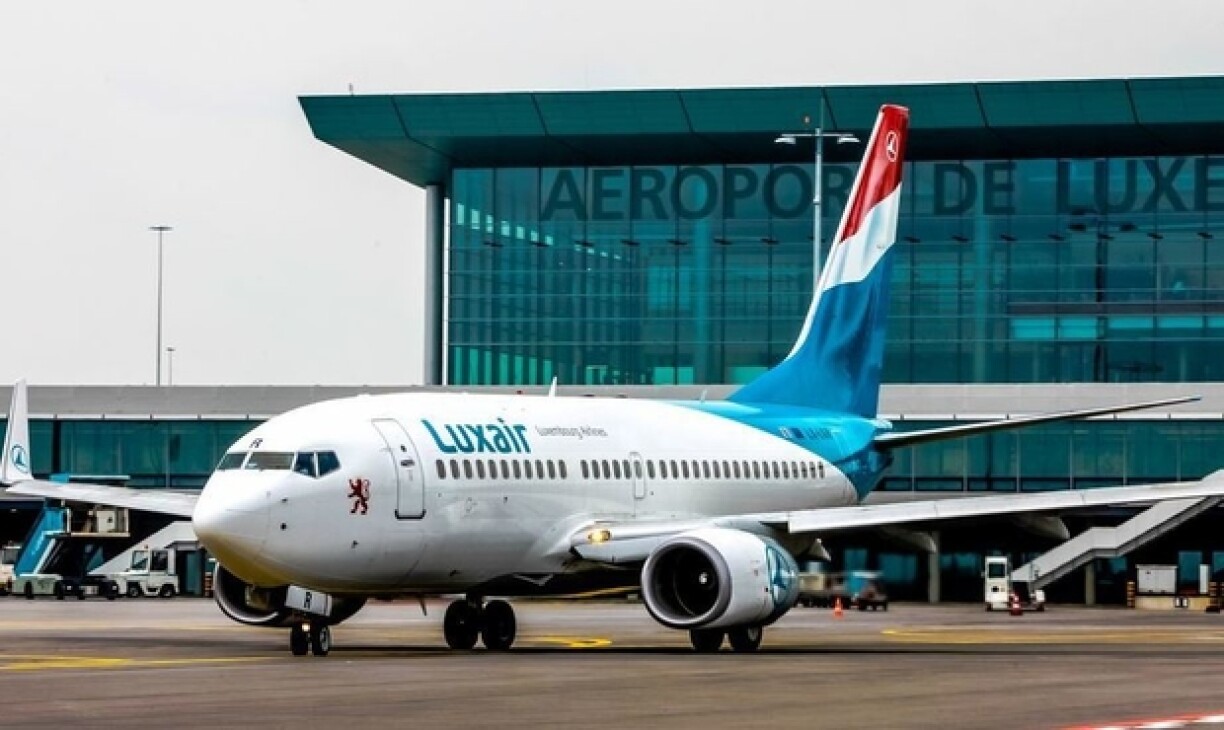
A study conducted by SEO Amsterdam Economics has estimated the total economic impact of Luxembourg Airport at €9.2 billion, equivalent to nearly 13% of the Grand Duchy's GDP.
At a press conference held at Findel Airport on Wednesday, Luxembourg Airport CEO Alexander Flassak emphasised the facility's critical role in the national economy. "The airport is essential to the Luxembourg economy," he stated, as he presented the findings of the study, which assessed the economic significance of Lux-Airport.
The €9.2 billion figure was calculated by SEO Amsterdam Economics, an independent research organisation with expertise in this field. The group previously published a comprehensive study in 2024 analysing the economic and social impacts of European airports. For this latest assessment, they focused exclusively on Lux-Airport.
The estimate raised eyebrows among members of the press, given its substantial representation of Luxembourg's GDP. When questioned about the figure, senior researcher Dr Martin Adler expressed little surprise. "It's quite typical, actually," he explained, "in fact, it's quite logical for an airport located in a small region."

Dr Adler further elaborated on the methodology used to calculate the €9.2 billion figure, breaking it down into several components: "There is what we call the direct impact, which accounts for €1.6 billion and supports 7,000 jobs. This is complemented by the indirect impact (€2.2 billion), the induced impact (€2.4 billion), tourism (€1.7 billion), and the catalytic impact (€1.1 billion)."
The researcher noted that certain elements, particularly the catalytic impact of Luxembourg Airport, may be underestimated in the study. As a result, the announced figures of €9.2 billion and 90,000 jobs likely represent a conservative estimate. This conservatism is further underscored by the choice of 2019 as the reference year for the analysis – a period known to have been significantly impacted by the pandemic and a downturn in international travel.
Dr Christiaan Behrens, project manager at SEO Amsterdam Economics, highlighted the significance of this timing: "It was only from 2023 onwards that we began to see tourism rebound and the situation normalise."
Despite this, Dr Adler emphasised that the figures remain representative, as they closely align with those observed in 2024. He added that had the study been based on more recent data, the overall economic impact of Luxembourg Airport would likely have been even higher, given the significant increase in passenger numbers and cargo volumes since then.
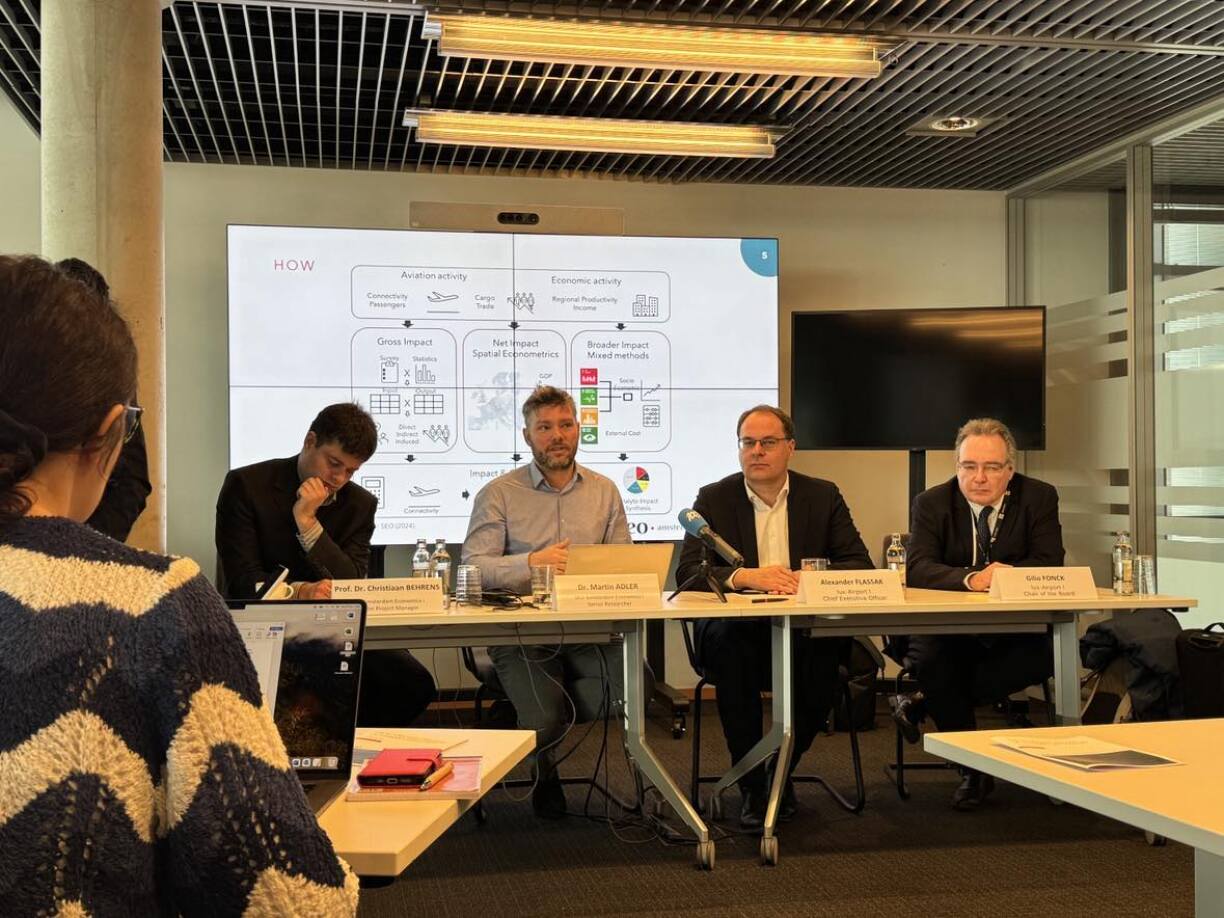
While acknowledging potential limitations, such as spatial constraints, Gilio Fonck, a member of Lux-Airport's Board of Directors, outlined plans for major investments aimed at enhancing the airport's sustainability and modernising its infrastructure. Meanwhile, CEO Alexander Flassak acknowledged the lack of space for a potential "territorial expansion" of the airport and dismissed the option of second runway.





