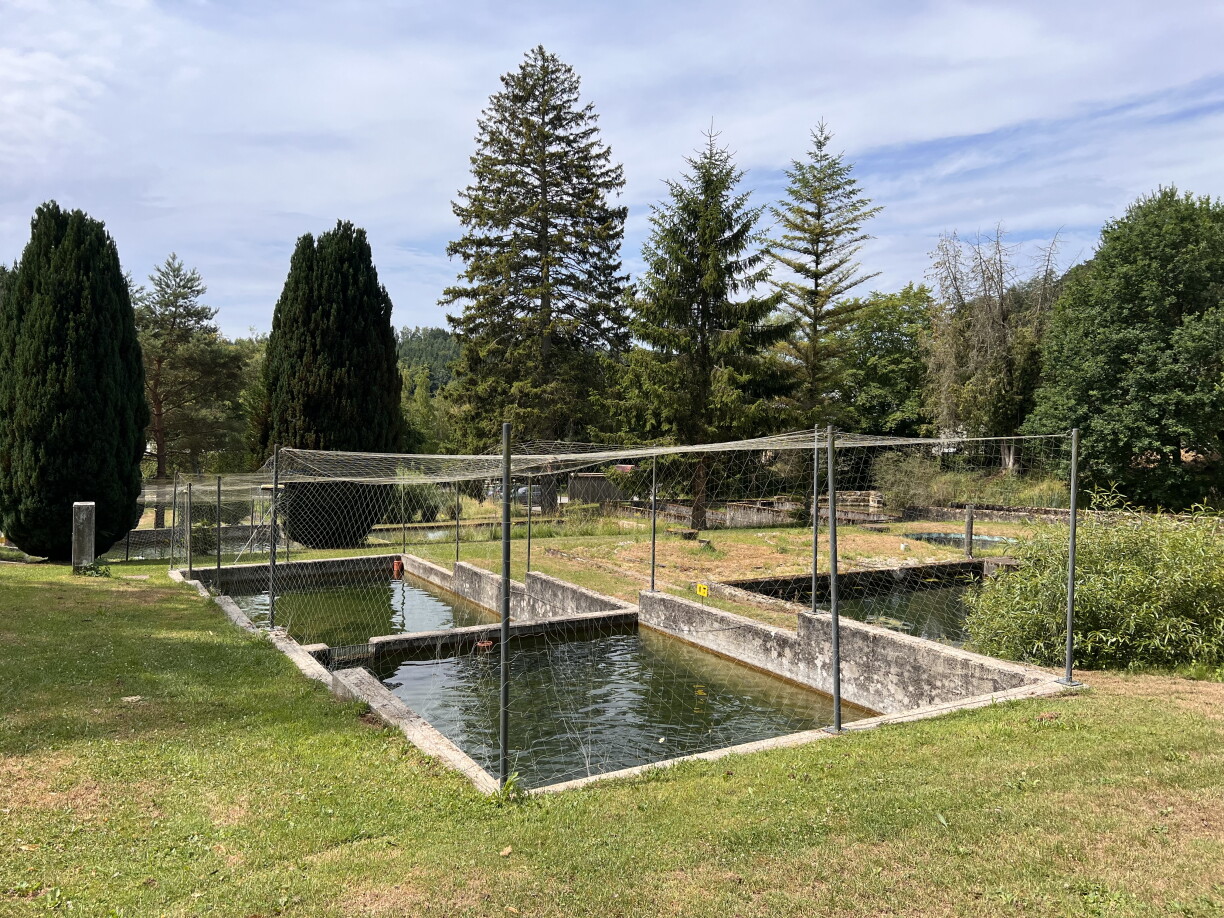
Recent heat has pushed water temperatures above 25°C in some of Luxembourg’s rivers and streams, reducing oxygen levels and placing fish and other aquatic species under increasing strain.
During a visit to the state fish breeding centre in Lintgen, Environment Minister Serge Wilmes and European Commissioner for Fisheries and Oceans Costas Kadis, highlighted the growing challenges facing aquatic ecosystems.
"As water heats up, oxygen becomes less soluble, leaving less of it available to aquatic organisms", explained Carole Molitor, a biologist at the Water Management Agency. Fish are particularly vulnerable because they depend on sufficient levels of oxygen in the water.


Species accustomed to cooler temperatures are particularly affected. In Luxembourg, these include brown trout and grayling, which are mainly found in colder streams and rivers.
"Grayling in particular struggle to cope with these temperatures, as they are normally accustomed to maximum temperatures of between 19°C and 20°C", Molitor said.
The biologist has observed changes in the situation over the past decade. Warmer summers and less regular rainfall mean that water is heating up more quickly, while river levels are falling.
But how quickly can rivers cool down again? According to Molitor, it does not happen overnight.
"It would take several days of substantial rainfall for the temperature to fall noticeably and become more tolerable for plants and animals."
The speed at which this happens depends greatly on water levels. Small streams are far more sensitive to drought and heat than larger rivers.
For Environment Minister Serge Wilmes, it is clear that climate change is placing increasing pressure on waterways. He considers river restoration to be one of the most important measures available.
This involves returning rivers and streams to a more natural state, with more trees along their banks, fewer obstacles, and a more natural course. The aim is to prevent the water from heating up too quickly.
"We need to make faster progress in restoring our rivers and streams here in Luxembourg", Wilmes said.
He explained that the ministry and several stakeholder groups are currently working on concrete proposals through the river restoration round table to accelerate such projects. However, the availability of land remains a major challenge.


Around 500,000 brown trout are raised at the state fish breeding centre in Lintgen every year. They are subsequently released into Luxembourg's lakes, rivers, and streams to support local populations.
Wilmes said this was important for preserving the "genetic integrity" of local fish species. Healthy fish populations were also an indication of good water quality, he noted.
European Commissioner Costas Kadis also stressed that the effects of climate change had now become part of everyday life.
"Climate change is no longer a theory. We are experiencing it directly in our daily lives", he said in Lintgen.
The EU was therefore providing increasing support for projects focused on climate protection, adaptation, and the preservation of aquatic ecosystems.
Experts agree that, as heatwaves and periods of drought become more frequent, protecting rivers and other bodies of water will become increasingly important.





