Luxembourg's deep-rooted relationship with the United Kingdom, shaped by decades of diplomatic, economic, and royal connections, is once again in the spotlight as Grand Duke Guillaume embarks on a courtesy visit to London.
The visit, which includes an audience with King Charles III on Wednesday, serves to reaffirm the close bonds between the two constitutional monarchies – a friendship that has weathered both dramatic political shifts and historic events.
Diplomatic relations between the two countries go back to 1880, but it was the Second World War that truly cemented the partnership.
After Nazi Germany occupied Luxembourg in 1940, Grand Duchess Charlotte and her family lived in exile in the United Kingdom. Broadcasting from the BBC in London, she regularly addressed the people of Luxembourg and thus became a symbol of resistance.
Her son, Grand Duke Jean, served in the British Army and took part in the Allied troops' arrival in Normandy during the campaign against the Nazi regime.
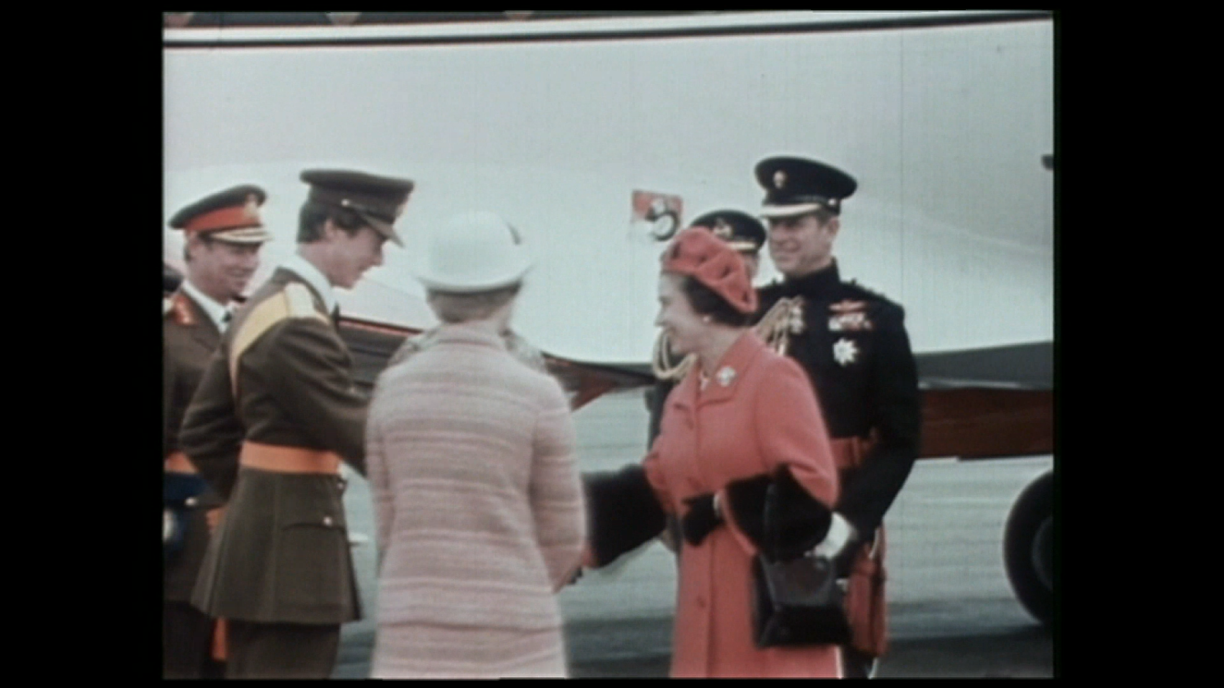
The personal ties between the royal families have added further depth to the bilateral relationship. In 1976, Queen Elizabeth II made her only official visit to Luxembourg, hosted by Grand Duke Jean.
Four years earlier, Grand Duke Jean and Grand Duchess Joséphine-Charlotte had travelled to London for their first state visit.
More recently, in May 2024, former Grand Duke Henri was received by King Charles III at Windsor Castle, in a more private capacity.
Grand Duke Guillaume is no stranger to Britain, having studied in the country and completed military training at the Royal Military Academy Sandhurst, followed by further studies at the Royal College of Defence Studies.
Nevertheless, this moment is particularly significant: It marks his first visit to London in his capacity as head of state.
Economic ties between Luxembourg and the UK remain robust, despite political changes in Europe.
In the four quarters to the end of June 2025, bilateral trade in goods and services reached approximately €25 billion, which is a rise of nearly 19% compared to the previous year.
Services dominate these exchanges. Of the £13.2 billion in British exports to Luxembourg, over 94% were services. Conversely, the UK imported £8.2 billion from Luxembourg, with about 85% in services.
The financial sector is particularly central: London is a major global financial hub, while Luxembourg plays a key role in investment fund management. For British financial firms, Luxembourg is a vital European platform.
There is also strong cooperation in research, security, and foreign policy.
Since the UK left the European Union on 31 January 2020, new administrative hurdles have complicated trade, mobility, and financial activities.
This has affected not only businesses but also the British community in Luxembourg.
Today, around 5,300 British nationals live in the Grand Duchy. Those who established residency before the end of the Brexit transition period were able to secure their residence rights through special provisions.
Politically, the next few years may bring Luxembourg and the UK closer once more. Newly appointed British Prime Minister Andy Burnham indicated in late October a willingness to discuss reinstating free movement between the UK and the EU.
He has expressed interest in exploring various models of closer cooperation and does not rule out the possibility of a long-term return to the European Union.
The upcoming EU-UK summit on 20 November is set to address issues such as food trade, youth mobility, and cooperation on emission regulations.
Closer economic integration could benefit Luxembourg directly, especially if it results in fewer trade barriers and easier collaboration in the services sector.


