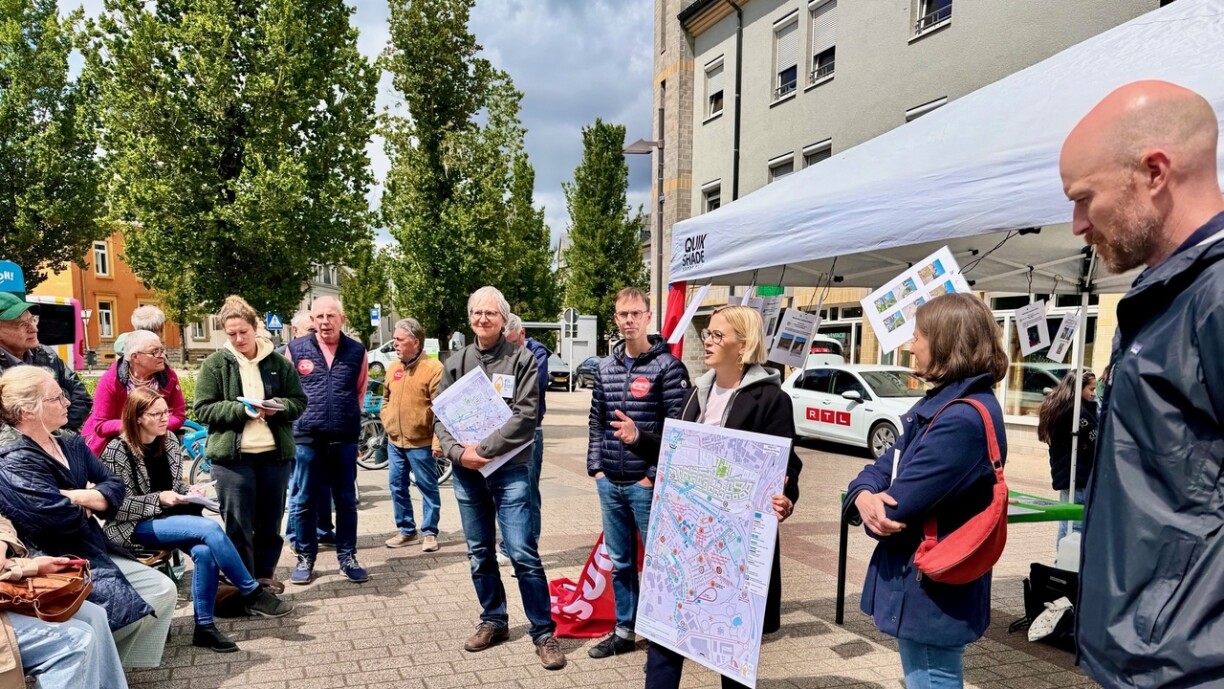
The 'Interesseveräin Gaasperech' association, in collaboration with the association 'Eis Stad', has presented a new traffic and mobility concept aimed at improving conditions in the Gasperich district.
On Friday, the organisers emphasised the importance of involving local residents in urban mobility planning. The initiative began two years ago as a participatory process, and the results have now been shared with the public.
Launched in 2023, the project began with a walking tour through the neighbourhood alongside interested residents to observe firsthand what was working, and what wasn’t. A week later, a follow-up workshop was held where participants were invited to openly share both their frustrations and the positive aspects of the area.
Johannes Birgmeier from 'Eis Stad' explained that the residents were encouraged to voice what bothered them as well as what they appreciated – and most importantly, to propose solutions. This collaborative brainstorming resulted in hundreds of Post-it notes, which the team used to develop eight preliminary maps. From there, they created a composite visual plan that gathered and organised all the residents' suggestions into one cohesive concept.
The final mobility plan includes a wide range of recommendations and ideas. Among the most prominent were three consistent priorities: residents expressed a desire for more public spaces that promote community life, with increased greenery and welcoming meeting places; they called for improved infrastructure for active mobility, particularly for pedestrians and cyclists; and they highlighted the need to reduce through-traffic and calm down existing road traffic, with urban design changes aimed at creating safer, more pleasant streets.
These needs, Birgmeier noted, reflect a growing desire for more liveable neighbourhoods, and they mirror concerns voiced in other districts where Eis Stad has previously worked, such as in Bonnevoie and Merl-Belair. Most recently, he said, similar feedback was heard during discussions about Limpertsberg, where the city has since responded by turning the entire district into a 30 km/h zone starting from 7 July.
The team behind the Gasperich plan had hoped to present their findings to the Luxembourg City council last Friday, having formally invited members of the mayoral council. However, Melanie Troian, president of the 'Interesseveräin Gaasperech' association, expressed disappointment that no one from the council attended.
Still, she remains hopeful that a constructive dialogue will take shape between local government officials, technical staff, and residents to discuss these needs and identify practical ways forward.
The organisers stressed that the concept they presented is open to further input and welcomes additional suggestions. But as they pointed out, there are clear problems facing residents – problems that, they say, can no longer be ignored.





