Freemasonry is a term familiar to many, though few truly know what goes on within its ranks. The movement keeps much of its activity out of the public eye, which has fuelled speculation and myth.
This year, however, the Grand Lodge of Luxembourg is marking its 250th anniversary, offering a rare insight into its principles and practices.
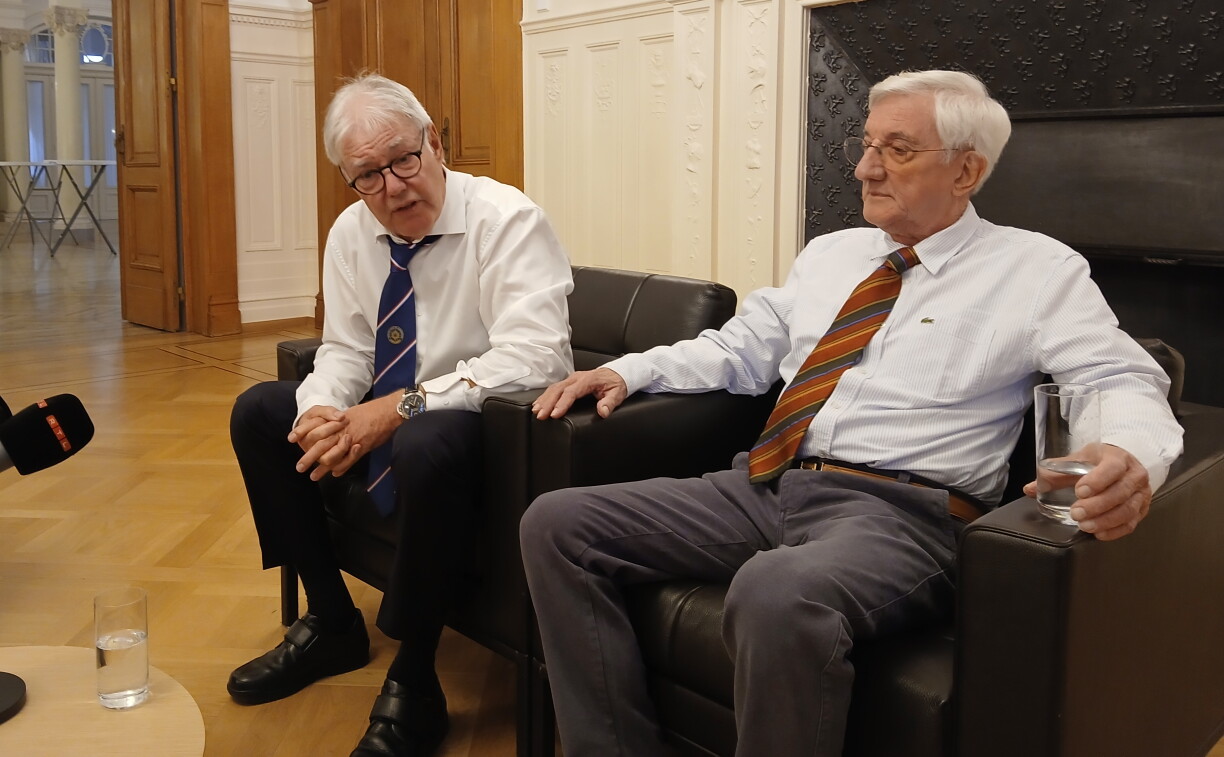
In this context, RTL spoke with leaders of the Grand Lodge about what the fraternity represents in modern Luxembourg.
Freemasonry traces its roots to medieval guilds of stonemasons, who were responsible for constructing cathedrals and other monumental buildings. As the need for such craftsmen diminished over the centuries, their associations gradually opened up to people outside the original trade.
In Luxembourg, the first lodge was established in 1776 by an Austrian garrison. Since then, principles of the Enlightenment, such as liberty, tolerance, and fraternity, have remained at the heart of the local lodges.
According to Grand Master Jean-Jacques Rauchs, these values continue to guide members’ personal development.
Freemasonry is organised as an initiatory society, meaning new members undergo a special process before being admitted, he says. The focus is on moral and spiritual self-improvement, driven by the belief that individuals should constantly strive to become better people.
Members regularly engage in symbolic rituals that draw on the traditional tools of masonry, not for practical construction, but as metaphors for philosophical growth.
For example, tools like the set square and compass are given deeper meaning. The set square, once used to check the accuracy of stones, symbolises the importance of following a just and honest path.
The compass represents an open mind and the value of inclusivity. These symbols are intended to encourage members to reflect on their own actions and decisions.
Despite its inclusive ideals, Freemasonry in Luxembourg has a rigorous application process. Candidates must be men aged at least 24, and after submitting an application, are subject to a thorough evaluation that includes interviews and background research.
This process can take more than a year. Once admitted, members are allowed to disclose their own involvement but are expected to maintain the privacy of other members.
The fraternity’s preference for discretion has long given rise to conspiracy theories, including claims of secret plots or ambitions for a "new world order".
Grand Master Rauchs stresses that Freemasonry is not "a secret society, but a discreet one", and firmly rejects any link to such conspiracies.
Members may belong to political parties, provided these do not conflict with Masonic values, and practise any religion. However, everyday political or religious topics are generally avoided in lodge meetings, with discussions limited to broader philosophical questions.
The Grand Lodge of Luxembourg also refrains from taking public positions on political matters.
Looking to the future, Grand Master Rauchs explains that while the fraternity regularly reflects on its role in society, it does not intend to change simply to keep up with modern trends.
He believes that in today’s information-saturated world, where rapid reactions are the norm, Freemasonry offers members a chance to pause and reflect on their actions carefully.
The lodge deliberately avoids the fast-paced culture of social media and instead aims to promote a more thoughtful approach.
At present, the Grand Lodge of Luxembourg counts around 400 members across six lodges, with meetings held in French, German, and English.
Another major Masonic organisation in the country, the Grand Orient de Luxembourg, is considered more liberal, as it accepts women as members and sometimes takes public stances on political issues.


