The Mercosur agreement seeks to establish one of the world's largest free trade zones between the European Union and the South American Mercosur bloc – comprising Brazil, Argentina, Paraguay and Uruguay. The prospect of Luxembourg's approval has alarmed environmental and farming representatives, many of whom view the agreement with scepticism and fear that its negative consequences might outweigh the benefits.
In his State of the Nation address, Frieden argued that Luxembourg depends on export markets to sustain its economy, especially at a time when new trade barriers are emerging in various parts of the world.
For Blanche Weber, president of the Luxembourg NGO Mouvement écologique, this approach appears to prioritise economic objectives over climate and ecological responsibility. In conversation with RTL, she acknowledged the difficulty of covering every issue in a single speech, but said that it is troubling that the environmental crisis, which threatens both biodiversity and the climate, was largely absent from Frieden's address.
Weber expressed concern that the government's approach appears to reduce all policymaking to technical and economic development, with little sign of integrating ecological concerns into broader social and economic strategies.
Weber also expressed worry about Luxembourg's approval of the so-called 'Omnibus Regulation' at the EU level, which aims to simplify environmental legislation but could, she argues, weaken core elements of the European Green Deal. She warned that the changes would significantly undermine EU achievements in biodiversity, climate protection, and human rights.
Furthermore, the Mercosur agreement and the Omnibus Regulation intersect in ways that could further erode social and environmental standards, she stated.
Farmers' organisations have long been critical of the Mercosur deal.
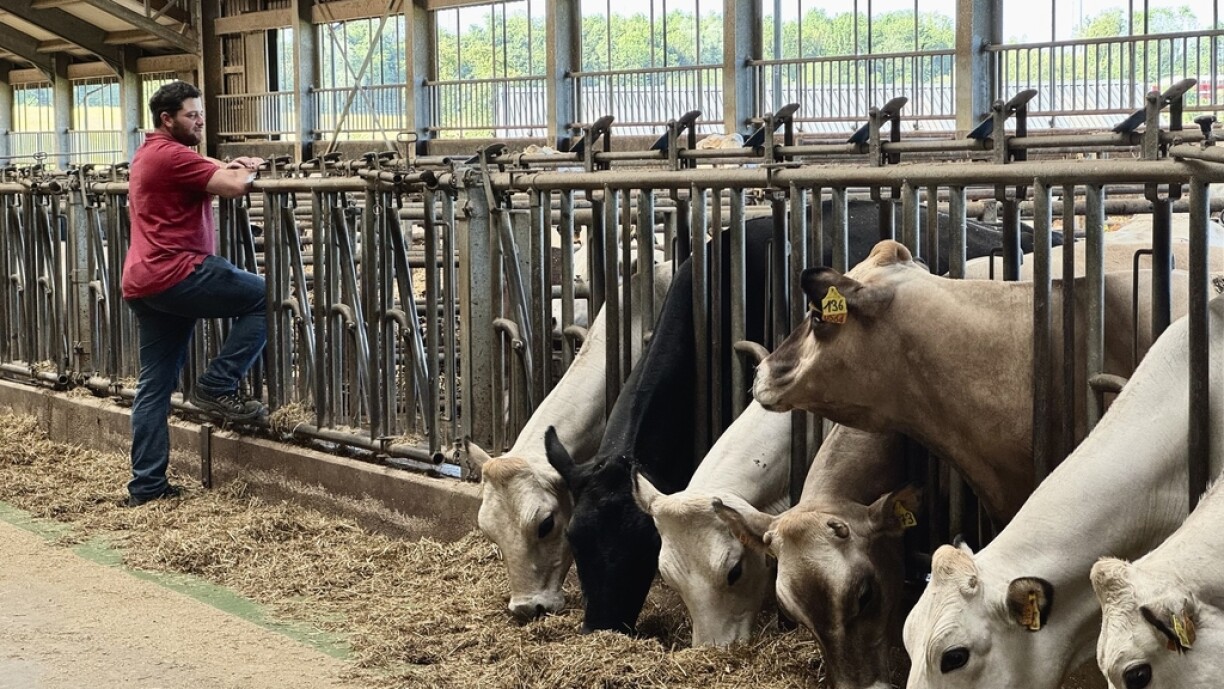
Christian Wester, president of the Luxembourg Farmer's Association, emphasised that beef production would be the sector most affected. Speaking to RTL, he pointed out that local farmers would be forced to compete with global industry giants, which could put pressure on the modest profits that Luxembourg's cattle sector has only recently begun to regain after the bovine spongiform encephalopathy (BSE) crisis of the 1990s.
In his speech, Frieden mentioned possible compensation for local farmers who might be negatively affected by the agreement. But critics like Weber see this as contradictory, questioning the logic of approving a trade deal that harms domestic producers, only to then compensate them.
From the farmers' perspective, Wester questioned where such compensation funds would come from, cautioning that if they are drawn from the existing agriculture budget, the effect would be merely symbolic and offer no real benefit to the sector.
According to Wester, only a small number of farmers are likely to gain from the deal – mainly those producing well-known regional goods such as Parmesan, Bordeaux wine, or Champagne. He expressed doubts that Luxembourg's own regional products, such as Crémant or Luxlait milk, would gain any meaningful market access in South America, given the limited volumes and demand.
While he stressed that Luxembourg's agricultural sector is not afraid of international competition, Wester underscored the need for a level playing field. He noted, for example, that growth hormones are still used in South American beef production – practices, that, according to Wester, have been long banned in Europe, thus raising concerns about differing food safety and environmental standards.
As for the current status of the Mercosur agreement, there remains uncertainty. It is still unclear what form the final version will take or what it means when officials say that social and environmental standards have been adjusted.





