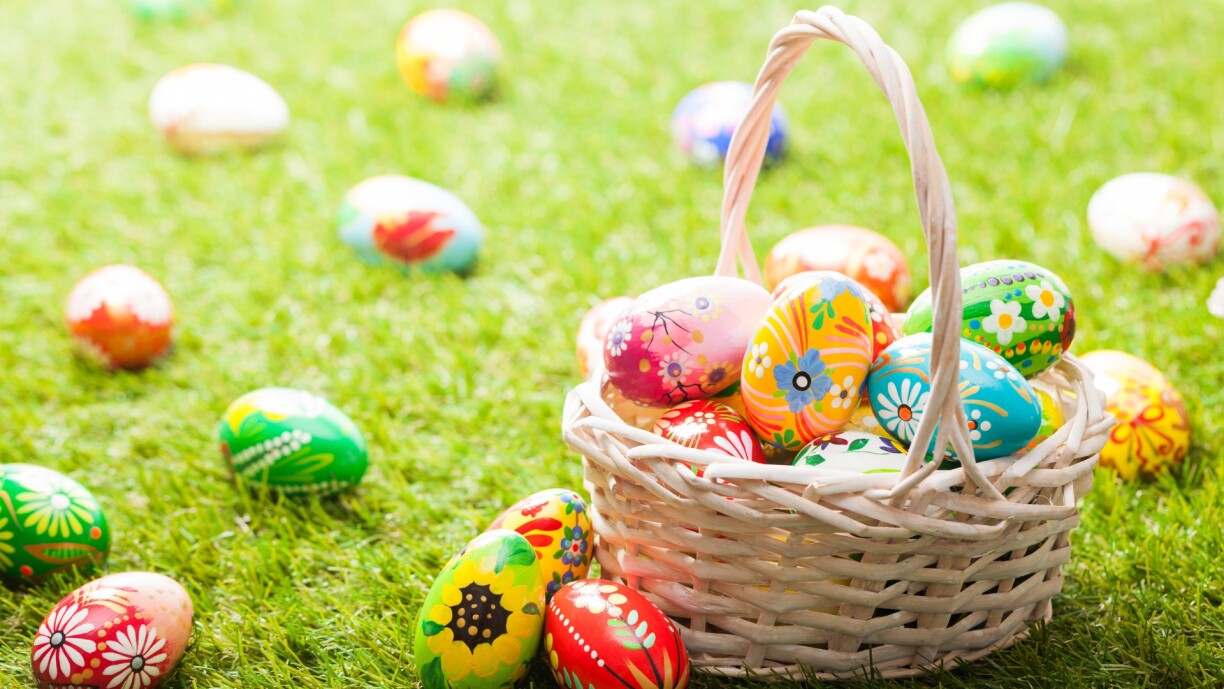
There are several explanations for the origin of colouring eggs on Easter, with one thing being certain: it is a long-standing tradition. In Christianity, the egg symbolises new life, closely linked to the resurrection of Jesus on Easter Sunday. In earlier times, people refrained from eating eggs during Lent, which made Easter the ideal moment to give away the surplus — beautifully decorated, of course.
How does the tradition play out in Luxembourg today? Our colleagues from RTL visited the Theisen family, who run a small farm, to get insight into the local egg industry and catch a glimpse of their henhouse.
Whether it's Easter or just another day, nothing really changes for Véronique Theisen. Every day, she spends two to three hours in the henhouse packing the freshly laid eggs.
Theisen explains that their farm keeps around 3,400 hens indoors, and on average, they produce about 3,200 eggs a day – a laying rate of roughly 92%.
Easter or not, the hens stick to their rhythm, laying eggs with impressive regularity – about one every 25 hours. These eggs can be safely consumed for at least 28 days, and when refrigerated, they will stay fresh for up to six weeks.
The Theisen family invested heavily last year in a new double henhouse and made the full transition to organic farming. Paul Theisen says the switch to organic had been on their minds for some time.
As a small-scale farm that enjoys working closely with animals, they felt it was the right step — not just for practical reasons, but because it aligned with their values. On top of that, organic production offers more security in terms of demand and guaranteed buyers.
Only around 13% of eggs consumed in Luxembourg are produced locally, with organic eggs accounting for 20% of demand – a sector seen as having strong growth potential.
Eggs have recently made international headlines due to the outbreak of bird flu in the United States, where soaring prices pushed eggs into luxury territory – with some paying more than $10 per dozen and inflation rates hitting 160%. These developments have also had some impact in Europe.
According to Paul Theisen, while the price of conventional eggs has increased, organic eggs have remained relatively stable. He adds that their farm sells some eggs directly to consumers and currently charges €6 for a dozen organic eggs.


Planning a last-minute session of egg boiling and colouring? Véronique Theisen has a handy tip: it is better not to use freshly laid eggs right away.
She recommends waiting at least a week before boiling an egg, as this makes it much easier to peel. And if you are aiming for a soft-boiled egg, briefly running it under cold water afterwards also helps.





