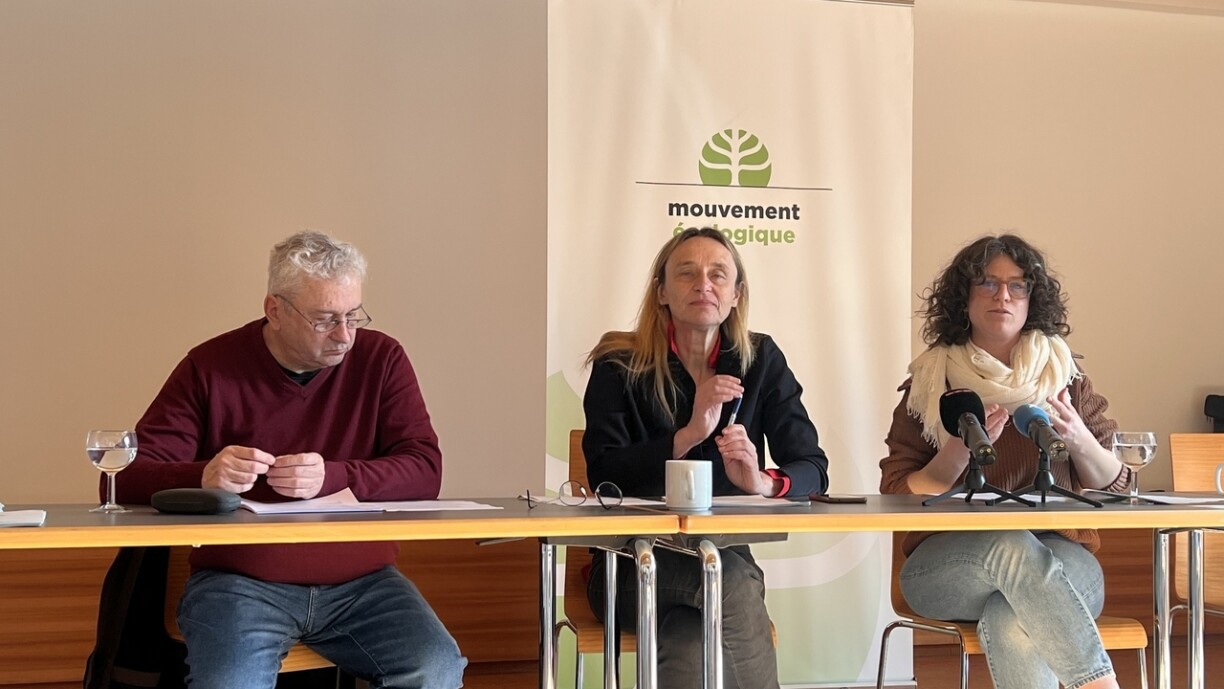
The Ecological Movement has issued a strong protest against the proposed reform of the Nature Protection Act, warning of potential legal action. The environmental group argues that the government's push for faster and more extensive construction threatens both biodiversity and the well-being of local communities.
Contrary to government assurances, the Ecological Movement believes the reform will ultimately reduce green spaces in Luxembourg's towns and cities, not expand it. Furthermore, they warn that the promised acceleration of procedures may hit its limits.
While the Ecological Movement acknowledges that Luxembourg needs more living space, Blanche Weber, president of the association, argues that the reform might do more harm than good. She contends that the Nature Protection Act, which was designed to safeguard nature and improve its condition for the benefit of biodiversity and human life, will be undermined by the reform.
"We already have a Nature Protection Act", Weber said. "Its goal is primarily to protect nature and, where possible, improve its condition, in the interest of both biodiversity and people. Unfortunately, this legislative proposal tramples on those very goals. What's worse, we believe certain provisions will not even succeed in enabling faster construction."
A central concern for the Ecological Movement is the government's failure to ensure adequate compensation for the loss of green spaces and biodiversity during construction. Under the reform, inventories of different species during construction would be eliminated, which the Ecological Movement strongly opposes.
Claire Wolff, responsible for biodiversity withing the association, explained: "We say no – these inventories must still be conducted. It's essential to identify what is there and protect it. These inventories should be done at the very start of any construction project to avoid unnecessary delays.
"Additionally, certain species should be managed by the state, so the responsibility doesn't fall on private individuals. And when large-scale inventories are conducted, we could immediately introduce compensatory measures, such as a green plan for municipalities to follow."
The Ecological Movement argues that there is no tangible connection between the destruction of green spaces and the government's compensation plans. Moreover, the association alleges a lack of professional and data-based information used by the Ministry of the Environment.
"I want to stress again that this draft law has not been discussed in the relevant technical bodies," Weber noted. "There is the Nature Protection Observatory, which is meant to advise the ministers with expert input, but this law was never reviewed there. The fact that the minister cannot even prove that the compensations will truly offset the destruction is absolutely unacceptable. That should be the core of the matter."
If no changes are made to the reform text, the Ecological Movement has vowed to take the matter to the European Commission and pursue all legal avenues to defend its position.
In addressing Luxembourg's housing crisis, the Ecological Movement also suggests focusing on the renovation of existing buildings, citing that an estimated 5–10% of properties in Luxembourg are vacant.





