Dudelange is investing heavily in a series of major infrastructure projects aimed at significantly improving residents' quality of life.
The town's population has grown steadily in recent years, rising from around 20,000 inhabitants in 2014 to approximately 22,000 today, with further growth expected in the coming years. The 'NeiSchmelz' development alone is projected to bring over 3,000 new residents.
According to Mayor Dan Biancalana, who also serves as an MP for the Luxembourg Socialist Workers' Party (LSAP), a rapidly expanding town requires new or renovated infrastructure. In response to both this growth and social needs, the municipality is pursuing several "ambitious projects" spanning various aspects of daily life, with the overarching goal of strengthening social cohesion.
"Our strategy is therefore to make Dudelange a town on a human scale, and to keep it that way", Biancalana said. He explained that a municipality exists to serve the general interest and to listen to its citizens' needs in the broadest sense – not private interests, but the common good. "These are, I believe, elements that we are putting forward, because social cohesion also plays a role here", he added.
Emphasis is being placed on major social issues such as housing, education, sport, and community life. In addition to a new administrative building for the Heritage Management and Maintenance department, which consolidates administrative and technical services, the municipality has also invested in social housing. This housing is primarily intended for people in precarious situations, particularly young people, families, and individuals with reduced mobility.
According to Tamara Cozzi from Dudelange's housing department, 340 families are currently on the waiting list for this type of housing, while the waiting list for 40 people is set to close in May.
"We look at how long they have been on the list, but also their level of priority, of course", Cozzi explained. "In other words, we take into account their current situation: are they single parents? People living in unsanitary flats with mould? All these parameters are analysed to determine who gets the flat", she said.
The increase in population has also led to a rise in the number of schoolchildren, prompting Forge du Sud to invest in two major projects.
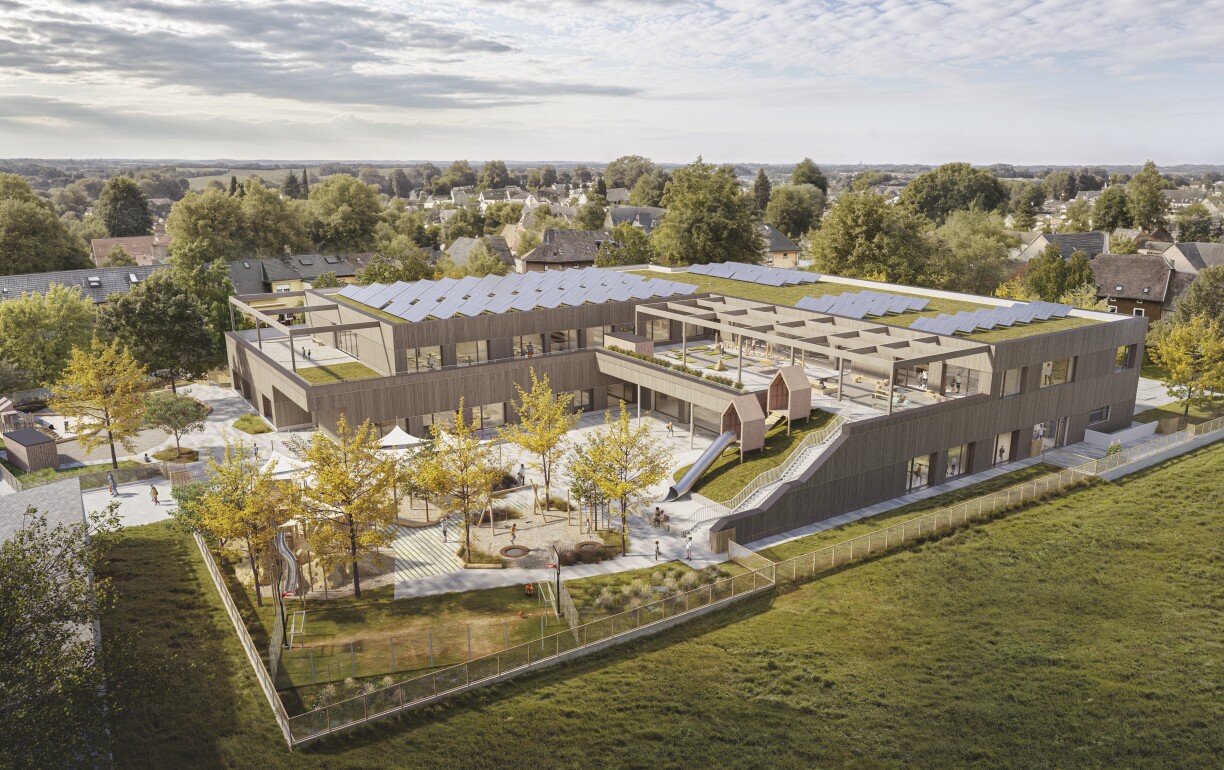
A new school with an integrated childcare facility is under construction in the Baltzing district. Developed in close collaboration with Dudelange residents, the project is expected to open for the start of the 2029 academic year. Simultaneously, the Brill school is undergoing renovation, with work focused on security, accessibility, and modernisation of the premises. However, as Joël Freitas from the building maintenance department notes, particular attention is being paid to preserving the architectural heritage of the historic 1930s building.
"We have looked at what teachers need today to be able to run a school properly in terms of classrooms, to ensure that we are up to date technologically, and we have tried to integrate the architecture, because the building is a listed building", Freitas said.
Sport has also been prioritised. The renovation of the Kennedy stadium will create a modern sports infrastructure, with work expected to be completed within two to three years. New indoor facilities, tennis courts, and padel courts are intended to meet demand from the sports sector.
Animals have not been overlooked either. A new animal shelter, set to open in October, will double the facility's capacity and replace the old neighbouring building.






