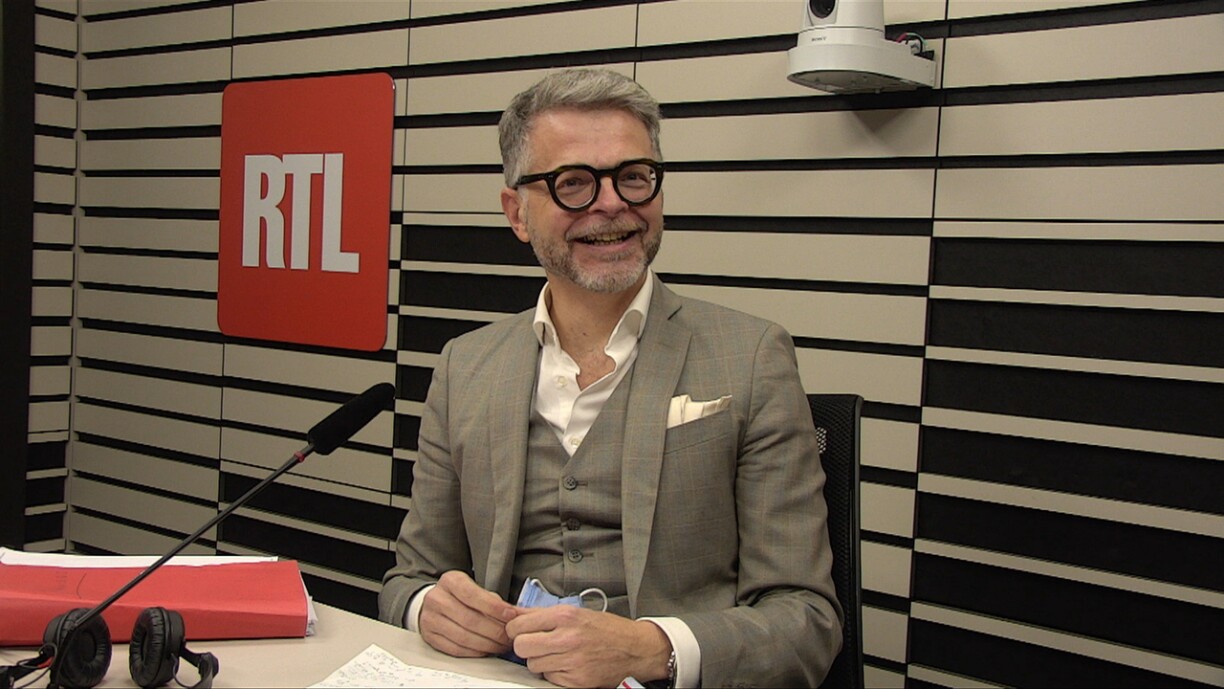
Heuschling stressed that the government's line of argument to drop the referendum is "invalid", explaining that even if a potential referendum is split up into four parts, it still remains an issue that can be put up for vote. Professor Heuschling stated that personally, he is in favour of a referendum because it "is good for democracy".
However, the constitutional expert from the University of Luxembourg also thinks that it will not be possible to collect 25,000 signatures. And even if this happens, Heuschling argues that organising a referendum would present "difficulties regarding procedure and timing". If the initiative is successful, a referendum would have to be held within the next six months, Professor Heuschling explained, who also pointed out that three of the four proposed sections still have to be put up for vote first.
In addition, Professor Heuschling stressed that the 25,000 signatures of the citizens' initiative must not be confused with the petition that is currently on the website of the Chamber of Deputies. For the initiative, Luxembourgish nationals over the age of 18 must go to their local town halls and sign in person. If 25,000 signatures were collected, a referendum would automatically be triggered.
The petition, on the other hand, can be signed digitally and by a broader range of people. On its own, the petition does not force the government to hold a referendum, but the Christian Social People's Party (CSV) has recently stated that if the petition reaches the required threshold, it would use its position as the largest party in the Chamber of Deputies to trigger a referendum that way. Usually, Heuschling explained, this is not the case with petitions and it is rather extraordinary that the CSV has decided to tie such a decision to the success of a petition.
Heuschling went on to explain that a constitutional revision is important because the current text is "old and not well written". However, the current proposition is merely a "moderate modernisation" rather than a "quantum leap forward". According to the constitutional expert, a lot could have been done better, for instance regarding the Grand Ducal Court. Under the current proposal, the Grand Duke will keep his immunity. Deliberately giving an exaggerated example, Heuschling explained that this means that even if the Grand Duke "killed someone in front of witnesses" he could not be brought to justice.
While the role of Luxembourg's constitutional court has been slightly tweaked, Heuschling once again misses bold proposals for the future. While the proposed text does mention "national objectives", the constitutional expert thinks that it will still remain difficult if not impossible for individuals or NGOs in the Grand Duchy to appeal directly to the constitutional court to rule on "national objectives". Heuschling pointed out that in other countries, for instance in Germany or France, this has been successfully used to put pressure on governments in certain areas such as climate policy.
Another important area that could have been significantly fleshed out, according to Professor Heuschling, is that of European law and its relation to the Grand Duchy. Heuschling argued that this issue is particularly relevant against the backdrop of recent controversies, for instance in Poland.
When asked about the accusations of plagiarism against Prime Minister Xavier Bettel, Heuschling said that he was mostly "bewildered" by alleged statements made by Minister for Higher Education Claude Meisch, who is said to have talked down the severity of the accusations by arguing that there are different standards for master and doctoral theses. Heuschling stressed that he does not at all agree with this argument and stated that he makes sure to teach his own students correct citation techniques "from the beginning".





