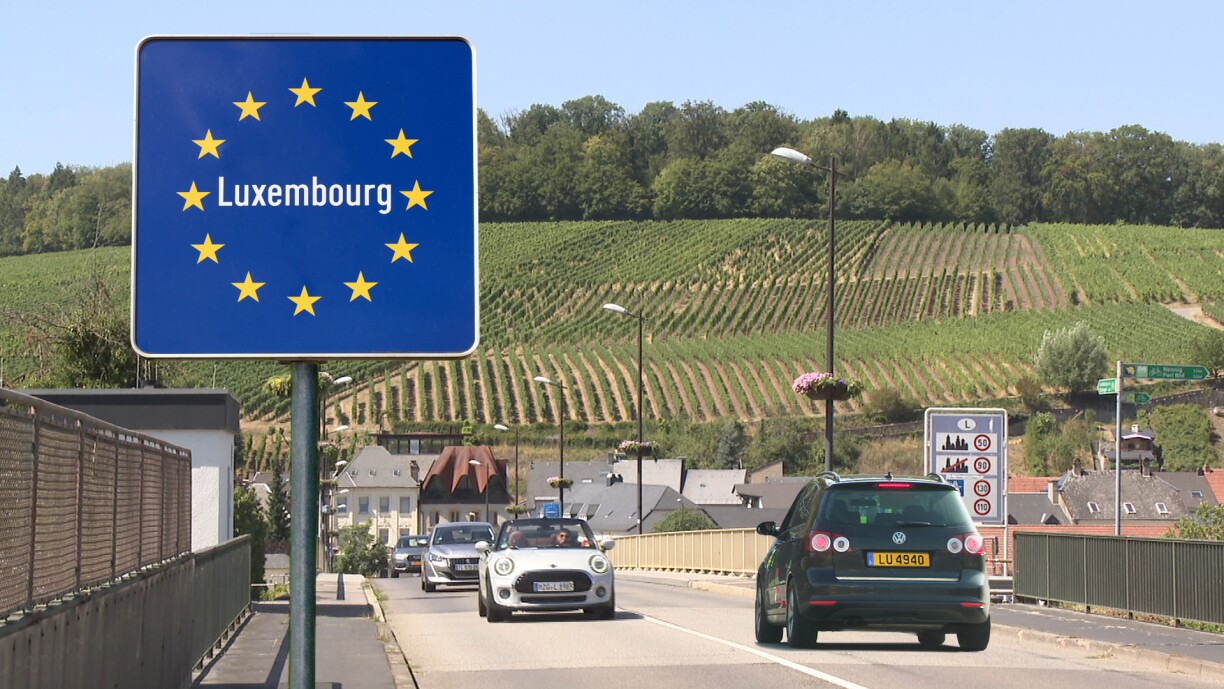
Car dependency remains a significant factor for home-to-work commutes in Luxembourg, according to the latest report from the National Institute of Statistics and Economic Studies (STATEC).
The Grand Duchy ranks among the European leaders in car ownership, with 678 vehicles per 1,000 inhabitants as of 2022, according to Eurostat.
In 2021, cars were still the preferred mode of transport for more than two-thirds of working individuals, with approximately 67% driving themselves to work and an additional 2.2% travelling as passengers. Public transport accounted for most of the remaining third, with buses being the primary choice for over 11% of commuters, followed by trains (less than 5%) and trams (less than 2%, but in 2021). Soft modes of transport, such as walking and cycling, were used by 12% of workers, split between nearly 10% walking and over 3% cycling.
Despite its dominance, car usage for commuting has shown a slight decline over the past decade. Between 2011 and 2021, the proportion of home-to-work journeys made by car decreased from 72.3% to 69.3%, with the gap partially filled by an increase in walking and cycling, which rose from 8.4% to 12.7%. Meanwhile, public transport use remained stable at around 17.6%, despite improvements in service offerings and the introduction of free public transport.
Notably, Luxembourg City has seen a sharp drop in car usage among commuters, falling from 54% in 2011 to 37% in 2021–a figure comparable to that of Paris.
The majority of working people in Luxembourg live relatively close to their workplaces: 70% reside within 20 kilometres, 86.7% within 30 kilometres, and 94.3% within 40 kilometres of their place of employment.
One key reason for the continued reliance on cars is the difference in travel times, as highlighted by STATEC. On average, a car journey to the urban centre takes 41.5 minutes, compared to 59.7 minutes by public transport. This disparity is even more pronounced for those commuting from outlying municipalities. Although infrastructure is well-developed, congestion–particularly in areas like the south and north of Nordstad–can slow car journeys, with trips taking at least 45 minutes by car versus 60 minutes by public transport.
However, it is worth noting that the average time difference between car and public transport is only about 15 minutes. It is also worth remembering that public transport offers the advantage of allowing passengers to engage in other activities during their commute.





