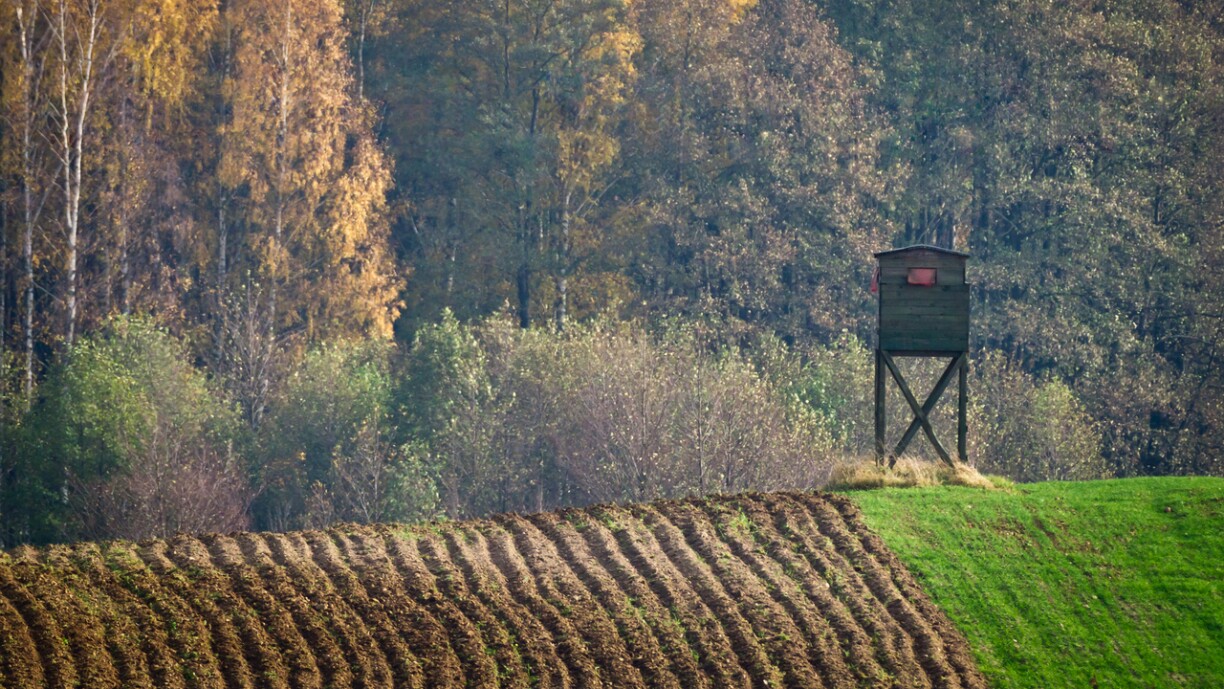
Comments made on Monday by Nic Etgen, president of the Federation of Hunting Syndicates, calling for reforms to the hunting law and for landowners to be allowed to choose their hunters, have drawn a blunt response from hunters following their general assembly in Mertzig.
Hunters have rejected Etgen's criticism, claiming that they are neither unwilling to cooperate nor should the mistakes of a few individuals be used as a reason to overhaul a law that, in their view, is fundamentally sound.
According to Marc Reiter, vice-president of the Luxembourgish Hunting Federation (FSHCL), it is not their sole responsibility that there is too much wild game in the country.
Nico Kass, a farmer who also hunts, agrees with Reiter, stating that hunters have a part to play, but sole responsibility for damage caused by game should not fall on their shoulders. Speaking at the general assembly in Mertzig, Kass expressed his opposition to a proposal by Etgen to shorten hunting leases to three years, arguing that wild animals don’t belong to anyone and therefore all parties must be involved. As an example, Kass proposes that farmers leave a strip clear along the edge of the forest when planting maize so that hunters do not needlessly raise complaints about lack of visibility when shooting.
Kass further explains that if a woodland owner informs the hunter of new planting and the hunter still doesn't fulfil their duty, this can be reported to the relevant hunting syndicate. Cooperation is needed to bring down game numbers where they are too high, said Kass.
It all sounds logical and, in theory, simple to implement. However, by listening closely to those on the ground, it becomes clear that not much trust is shared within the community. Although financial reasons do not officially account for the current dispute, they seem to play a role, as Reiter states that hunters are increasingly frustrated about always being expected to foot the bill, pleading instead for shared costs so that hunters are not the only ones accountable.
Reiter points to the penalisation of hunters in case of game damage, despite shooting a high number of game. He considers this unfair. Nevertheless, Reiter does not consider the hunting law to be fundamentally flawed, explaining that it rather lacks clear guidelines regarding forest damage caused by wild game. In this regard, he also deems it necessary to find out why there is too much game in certain areas, suggesting that wild animals may be being disturbed and driven from elsewhere.
The head of the Luxembourg Nature and Forest Agency, Michel Leytem, who attended the meeting of hunting syndicates on behalf of Environment Minister Serge Wilmes, also believes that all actors need to be listened to and made aware of their roles by tackling the problem at its root instead of assigning blame.
With this aim in mind, a Forest and Game Roundtable will be organised. The roundtable discussion is meant to encourage an open, taboo-free discussion – one that doesn't stop at the symptoms of game damage but actively seeks goal-oriented solutions to reduce game populations in the long term. It is clear that reaching this goal will require more hunting, which may not be to the liking of some people. However, as Kass puts it, the public must be reminded of the value of the forest and nature, while also keeping in mind the urgent message that the clock is ticking.





