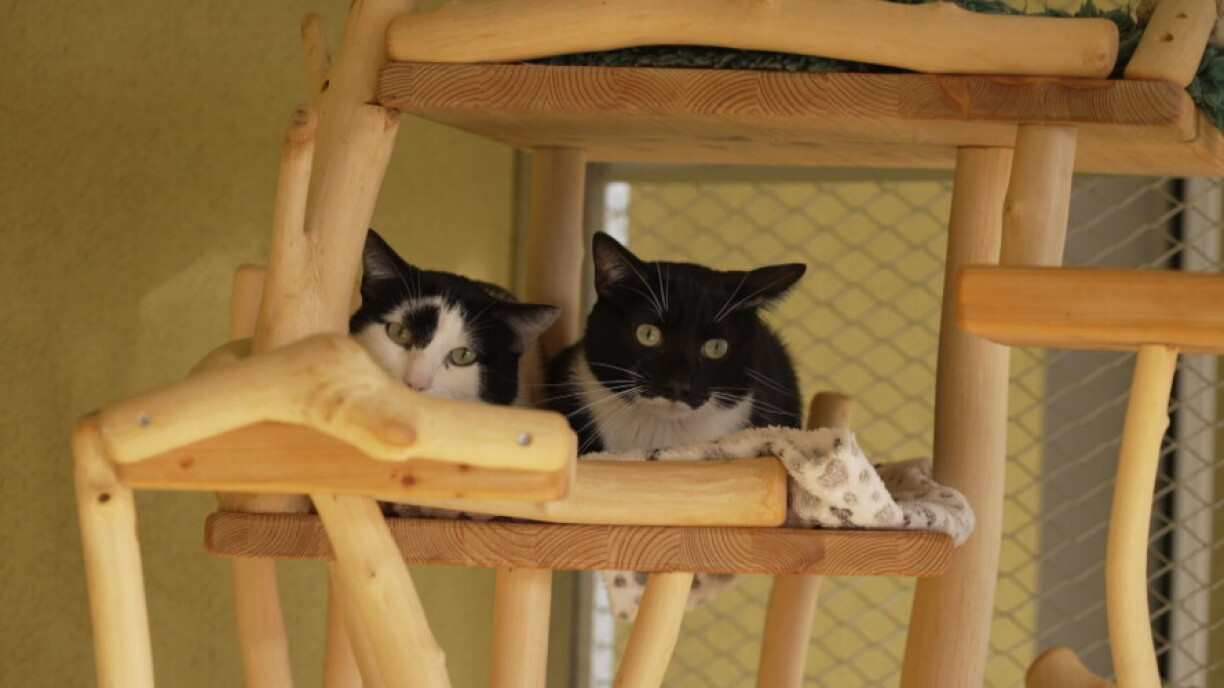
The animal shelter in Dudelange opened its new building on 17 August, offering improved accommodation for its furry residents.
The big difference from the old building is the increase in space, and infrastructure which is designed to meet the animals' needs. When all the work is completely finished, the old building next door will be pulled down. But why was the new-build necessary in the first place?
The organisation's Raphael Erpelding explains: "It was necessary to meet the required guidelines, such as emergency exits, all those things and also the other building was extremely old and extremely used. It was about time, because certain things were simply irreparably broken, and fortunately the municipality then simply said: it's ok, you as a club now get a new building, rather than having to improvise everything left and right on the other side, because that was simply no longer possible."
The new building cost around 8.8 million euros, financed by the Dudelange municipal council. All the dogs at the shelter now have their own room, and if two dogs get on particularly well, the compartments can be connected to one another. There are also two specially designed rooms for more difficult, dangerous dogs. While the cats don't have their own rooms as such, they are kept separately depending on their needs, for example, if an animal is unwell or requires regular medication. The animals all have unrestricted access to the outdoors via terraces attached to their compartments.


But the shelter is far more than just a building. For the animals, it is their home, at least for a time, so the days are carefully planned out. Oona Bindels, who is in charge of the shelter's dogs, explains: "We have feeds in the morning, lots of cleaning, and then the afternoons are dedicated to going outdoors, going for walks, playtime, intellectual activities, and so on."
The team describes itself as one big family, all pitching in to feed, clean, cook and take care of the animals.
Before an animal joins the group, it must first undergo a quarantine period of around ten days. If it is deemed healthy, with no sicknesses and no pregnancy, it can be moved into the main shelter. There is a special quarantine for kittens.
But the goal is not to keep an animal in the shelter permanently. However, there are conditions for people hoping to adopt a pet. "First they must love animals, and secondly, there has to be the right fit in terms of lifestyle. That's the most important thing really, that a pet suits their owner and vice-versa. Age and other factors don't really play as much of a role," says Erpelding.
The shelter also possesses a second-hand shop selling small products for cats and dogs.
In order to visit the animals, prospective owners must make an appointment, as the carers don't want the shelter to be viewed as a zoo.
If an animal is found by police or the fire brigade and there is no one currently available at the shelter, there are two emergency stations, as well as a specific room for veterinarians.
The new construction offers more space and more hope for animals that they will receive a second chance at being someone's pet.





