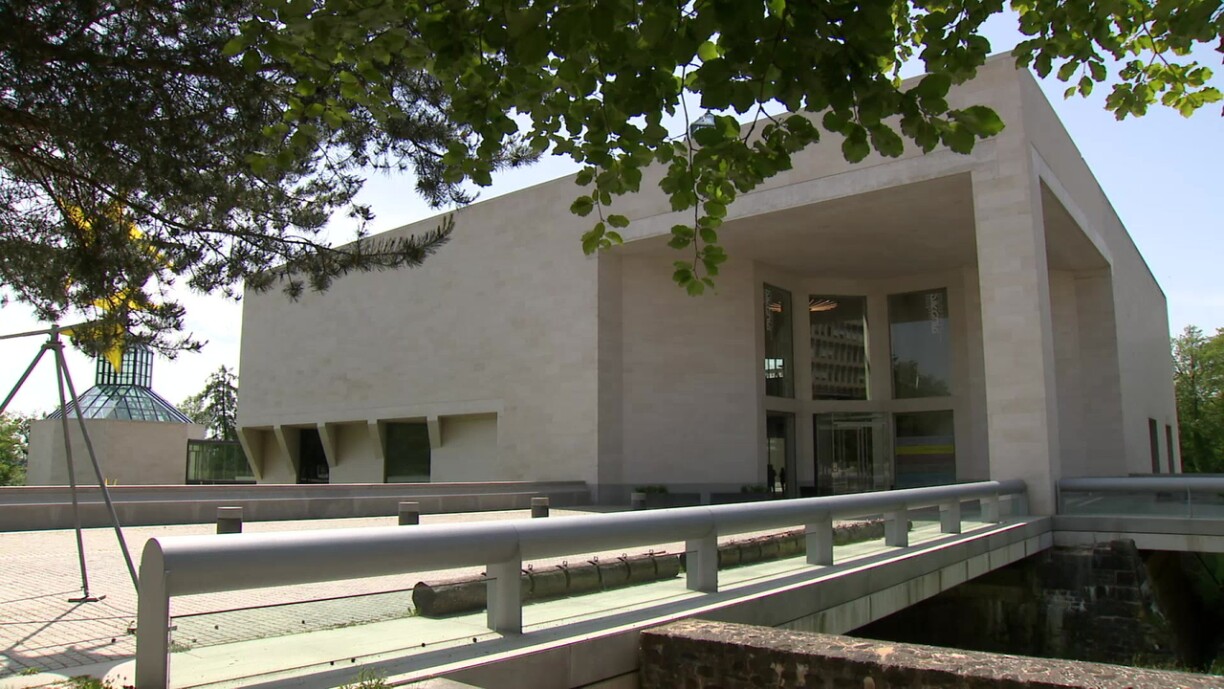
A recently unsealed audit report has confirmed significant internal issues at the Grand Duke Jean Museum of Modern Art (MUDAM), citing "antagonistic" and "polarising" tendencies within the institution. The findings call for "fundamental" governance reforms.
Concerns about MUDAM's management came to light in January when Patrick Majerus resigned as president of the administrative board. In his resignation letter, Majerus pointed to "shortcomings in the museum's internal management" – a culmination of long-standing tensions and unsuccessful attempts to address them.
Seeking to resolve these issues, the administrative board – then still led by Majerus – commissioned an external audit in autumn 2024. The consultancy was tasked with analysing the museum's management dynamics and proposing solutions. As stated in the audit's mission brief, the board aimed to "understand what is happening at the management team level" to help restore stability under Director Bettina Steinbrügge's leadership.
The findings of the external analysis, now submitted to the Chamber of Deputies, reveal multi-level organisational dysfunction at MUDAM. Consultancy firm Qualia identified three core conflict areas after interviewing staff and leadership:
According to the report, these conflicts have cultivated competing loyalties within the museum's staff, exacerbating divisions.
Qualia further highlighted operational instability caused by frequent personnel turnover at all levels, worsened by ongoing financial pressures. The consultancy noted these conditions have eroded respect for organisational hierarchy, creating a cycle of dysfunction.
The report describes a well-intentioned but problematic rescue effort: after boundary violations between governance bodies occurred, leaders began bypassing established chains of command. Qualia warns this environment has severely compromised operational efficiency and leadership authority.
"Employees now feel pressured to take sides," the report states, creating systemic distress that prevents the director from exercising "healthy" managerial control.
The Qualia report presents unambiguous recommendations to address MUDAM's systemic issues, emphasising several critical reforms:
The report's executive summary prioritises restructuring the relationships between the Ministry of Culture and the administrative board, the board and museum management, as well as leadership and staff hierarchies.
These findings corroborate concerns raised in mid-2024 by then-Board President Patrick Majerus, who documented staff complaints about management. One notable example cited: "Bettina sometimes contacts junior staff directly rather than working through the Management Team, generating stress and uncertainty."
While Qualia presented its conclusions to museum leadership in January, the new president of the administrative board Jean-Paul Olinger told RTL in late March that the report remained "under finalisation," noting its conclusions would guide future organisational decisions.
The parliamentary culture committee has received only the report's summary to date, though members have formally requested full disclosure. Culture Minister Eric Thill has also agreed to provide lawmakers with Majerus' original 2024 alert documentation.
*Editor's Note: Since the audit's completion, MUDAM's administrative and financial director has also resigned.
Update – Culture minister responds to allegations: Luxembourg MPs reject Green Party's transparency resolution amid MUDAM controversy
'Climate of fear': Parliament to examine Mudam governance after wave of resignations
'Climate of chaos and fear': Internal files detail staff complaints against MUDAM director





