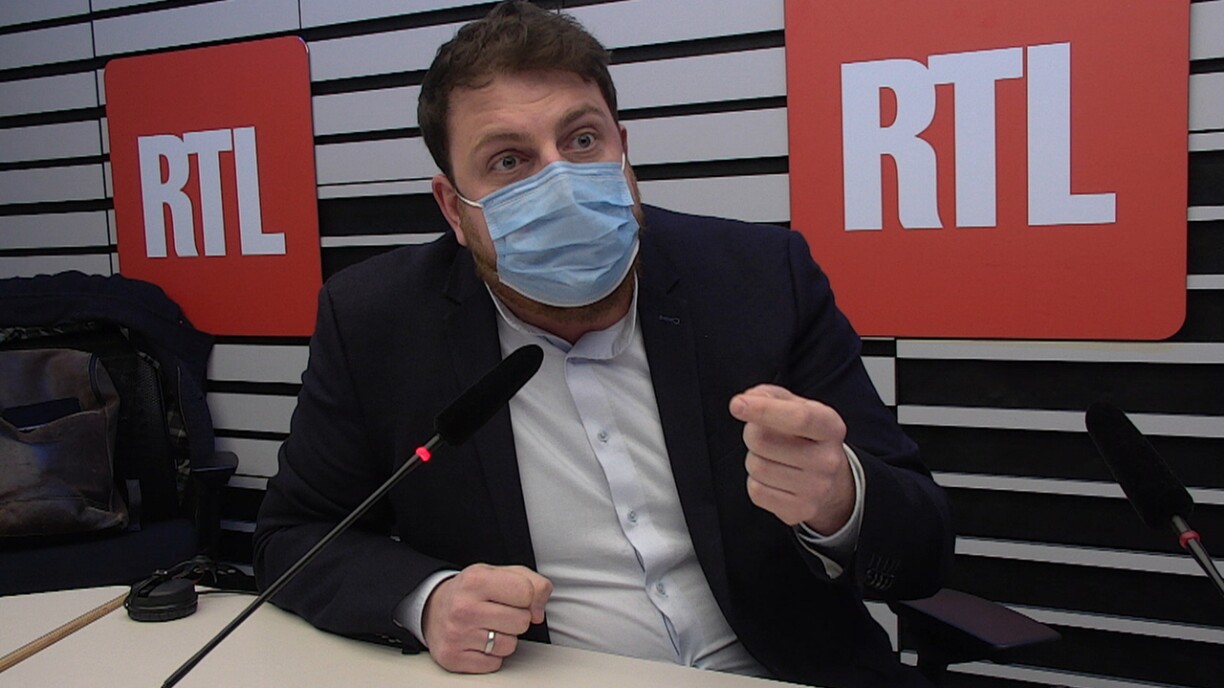
Reacting to news reports that two legal opinions apparently concluded that the contract between the Ministry of the Environment and the operator behind 'SuperDrecksKëscht'has no legal basis, Sehović stated that this is "not quite right".
In 2005, the Chamber of Deputies passed a law on the operation and funding of the 'SuperDrecksKëscht' initiative and since then all governments, the Chamber of Deputies, and the Council of State "assumed that this was enough". According to Sehović, the issue is that the "legal interpretation" has changed, something which was already evident during the funding of the RGTR bus network. The co-president of the Green Party thinks that it is now up to the Chamber of Deputies to check whether an additional financing law is necessary.
Sehović stated during his interview on Tuesday morning that he had read the two legal opinions in question. This led to criticism by the Christian Social People's Party (CSV), in particular by the head of the CSV's parliamentary group, Martine Hansen, who wondered in a tweet how it was possible that someone who is not an MP had access to these documents, despite the fact that the responsible Parliamentary Commission was told on Monday by the Green Party that these legal opinions should not be made public for the time being.
Last week, the Green Party officially announced that it is in favour of a vaccine mandate for everyone from the age of 18. Sehović described it as a "nuanced position" that was the result of internal discussions during which party members tried to find a balance between fundamental rights and individual freedoms on the one hand, and collective responsibility on the other. In addition, Sehović thinks that the issue is also about practicality. When asked why his party thinks the vaccine mandate should apply from the age of 18 and not, as is the case in Italy, from the age of 50, Sehović explained that while minors are not the ones at risk of overwhelming hospitals, they are the demographic that has "suffered the most" from Covid-19 restrictions. For this reason, a vaccine mandate for all adults would be "an act of solidarity towards minors".
Regarding the question of penalties for those who might refuse to comply with a vaccine mandate, the co-president of the Green Party stressed that his party is against criminal sanctions. Instead, the Green Party would prefer to introduce administrative sanctions that would apply if certain deadlines were not met. However, Sehović stressed that the issue of penalisation is "not a priority", as the main goal of a vaccine mandate would be to reach out to those who, "for various reasons", have not been vaccinated yet.
During his interview, Sehović also discussed taxonomy, i.e., the European classification of energies. The Green Party is outraged that the European Commission proposes to classify nuclear energy as a "stable and sustainable" energy source. Sehović stressed that his party rejects both of these arguments, referring to supply problems and the price increase of uranium, which could be traced back to the political crisis in Kazakhstan. To the comment that the EU is not producing enough sustainable energy and has thus no other choice than to make use of alternative energy sources, Sehović replied that "a lot of progress has been done" over the past ten years.
According to Sehović, the question is whether France should receive European tax money to keep "dilapidated reactors" such as Cattenom operational or not. For the Green Party and several countries such as Germany or Austria, the answer is a clear "no", Sehović stated.





