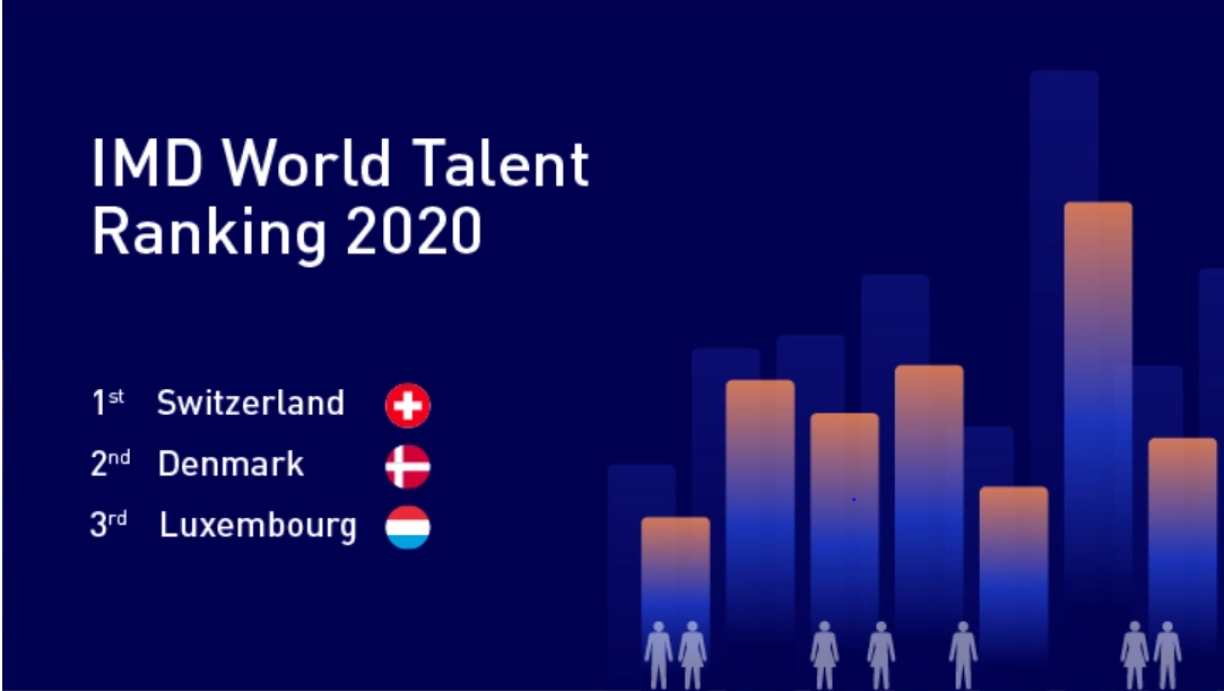
In the 2020 standings, Switzerland and Denmark hold the first and second position, respectively, for the fifth consecutive year.
Switzerland leads the way for the fourth year in a row, Denmark is second and Luxembourg third in the IMD World Talent Ranking 2020.
Luxembourg, Iceland and Sweden complete the five most competitive economies with respect to talent. Austria, Norway, Singapore and the Netherlands also remain in the top ten.
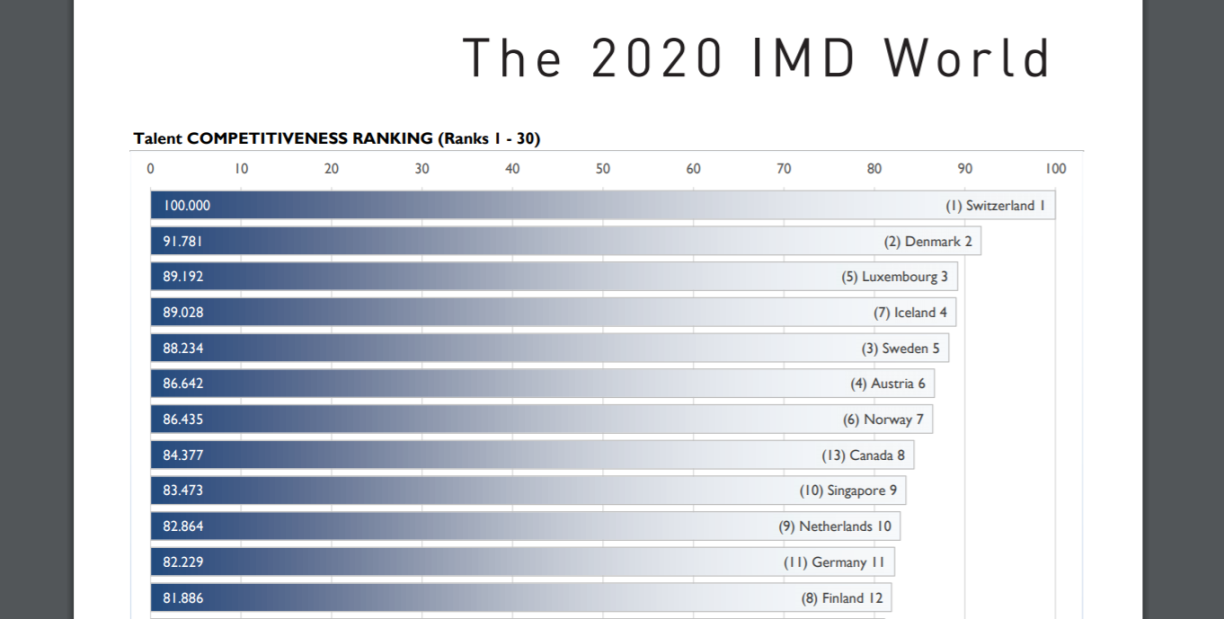
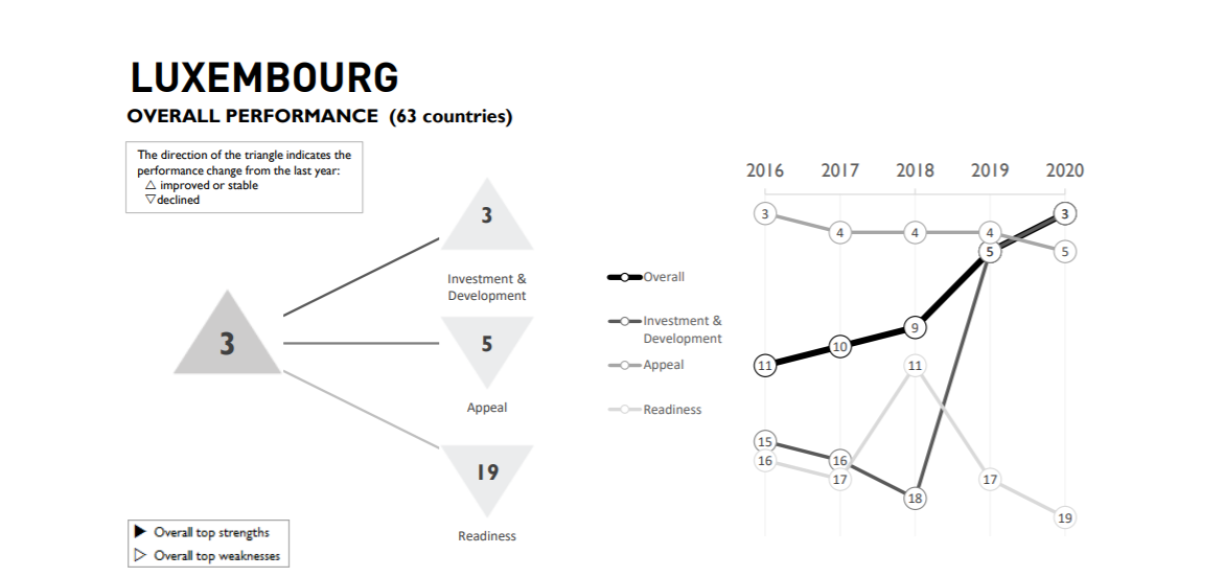
Luxembourg, in third, has, according to the report, seen a consistent improvement over the past five years, gaining an impressive eight places and rising from 11th to third.
This is, in part, due to a marked improvement in the Investment & Development factor, "both relative to other economies but also in absolute terms".
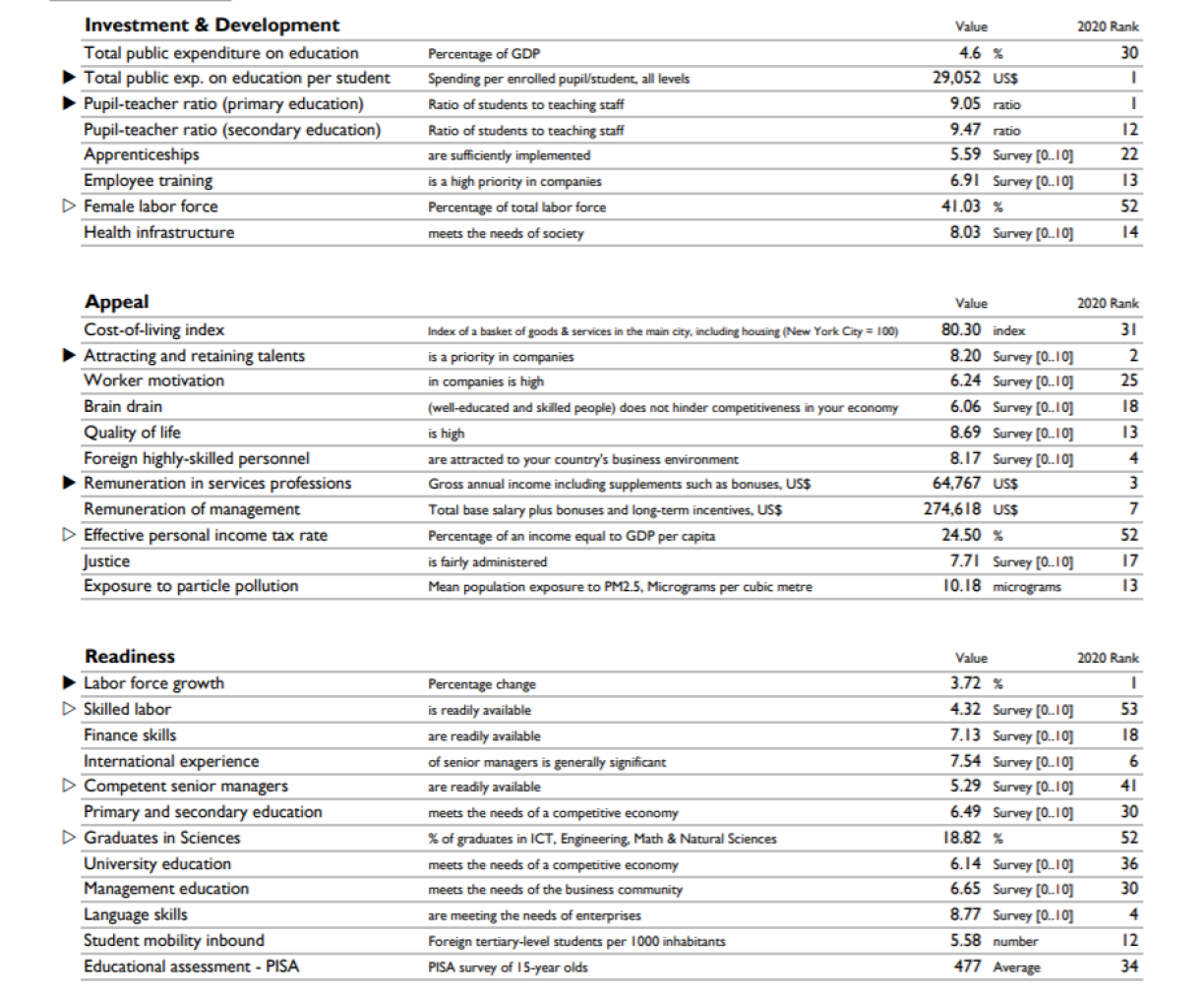
Luxembourg's strengths are identified as being education spending, wages and attracting diverse talent. Notable weaknesses remain equality between male and females and individual income tax ratios.
Luxembourg's data was provided to the study by the Chamber of Commerce of the Grand Duchy of Luxembourg:
"Luxembourg’s increase in the overall talent ranking is partly the result of its performance in the investment and development factor in which moves up from 5th to 3rd. It leads the table in the total public expenditure on education (per student) and in the quality of education in primary school (as measured by pupil-teacher ratio). In appeal, it ranks 5th with solid performances in prioritizing the attracting and retaining of talent (2nd), the availability of foreign highly-skilled personnel (4th) and remuneration in services professions (3rd). In the readiness factor it ranks relatively low (19th) as a result of a negative turn in executive opinions about - for example - the availability of competent senior managers and the effectiveness of its primary and secondary education."
Switzerland balances a high-quality education system that earns top marks for those being channelled into university (#1) and for those embarking on apprenticeships (#1). The country is also attractive to foreign labour thanks to the high quality of life (#3) and remuneration (#1).
Denmark, in second, performs well across the board and stands out for the perceived fairness of its society (for instance, ranking first for justice).
The Institute for Management Development’s World Competitiveness Centre take a three-pronged approach in measuring talent in economies:
- The Investment & Development factor measures the resources earmarked to cultivate a homegrown workforce.
- The Appeal factor evaluates the extent to which an economy attracts foreign and retains local talent.
- The Readiness factor measures the quality of the skills and competencies that are available in a country’s talent pool.





