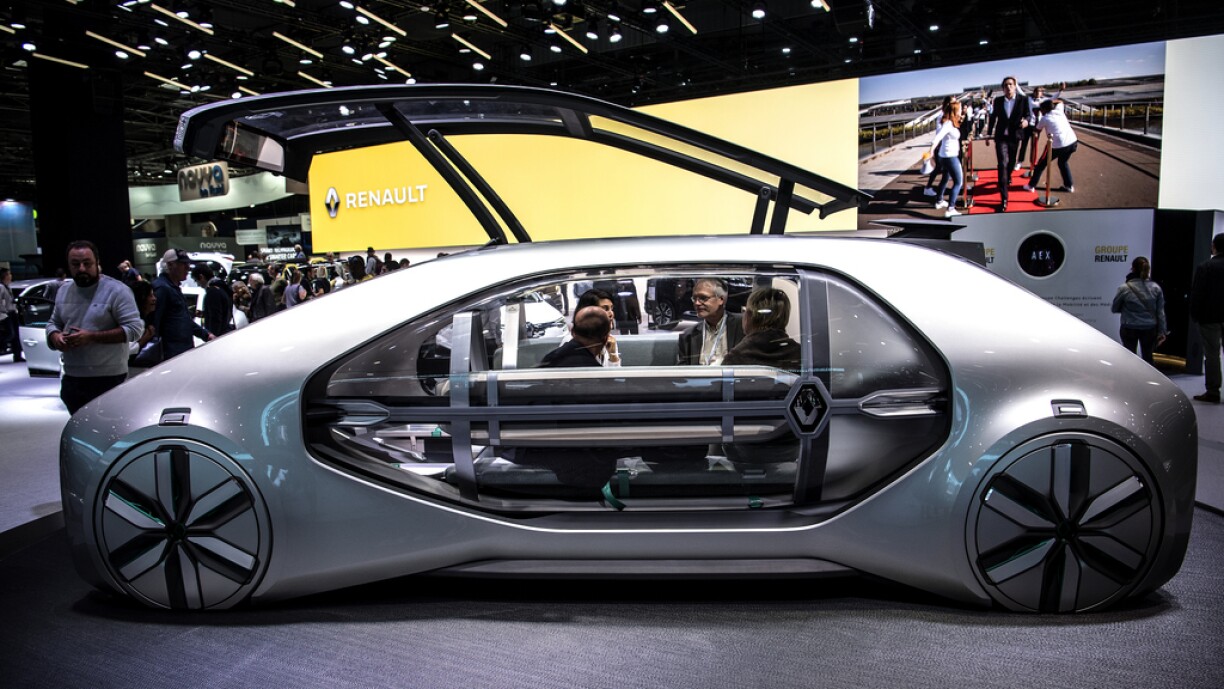
The article, published in the Annals of Tourism Research journal, aims to broaden the debate on how autonomous vehicles will affect society — notably going beyond issues of safety, which are already widely discussed, to ponder their impact on tourism, restaurants, hotels, and more.
The authors note that autonomous vehicles "may be on the mass market as soon as 2025," which means its high time to consider what their wide-spread introduction will mean to society as a whole.
For instance, they note that "restaurants may find themselves in competition with [autonomous vehicles] that become moving restaurants." These would have the benefit of not only being more easily accessible — rather than walking, driving, or otherwise making your way to a restaurant, the restaurant would come to you — but would also allow you to eat on the go without sacrificing food quality, and can offer spectacular and changing views by driving you around to specific sightseeing spots as you dine.
Similarly, they note that hotels will face competition from these vehicles. Much like a sleeper train, autonomous vehicles would allow you not only a night's sleep, but also the simultaneous transport to wherever you need to go next - whether it's the airport, a breakfast meeting, or straight back home. With that said they would, at least initially, suffer one considerable drawback as compared to a hotel, in that you wouldn't necessarily have access to a bathroom within the vehicle itself.
Another aspect explored by the authors of the article is that of sex. Getting frisky in cars is a staple of coming of age movies, and it would become all the easier with autonomous vehicles. Given that seats (and potentially beds) could be configured very differently once the need for a driver is taken out of the equation, this may free up space for amorous encounters. If part of a 'pool' of vehicles owned by a corporate entity it's not unlikely that surveillance equipment would chasten a majority of riders, but this wouldn't be an issue in privately owned vehicles.
Similarly, the authors put forward the possibility of mobile 'red light' districts. Autonomous vehicles would offer several 'benefits' to this industry, insofar as escorts' services would be rendered more readily accessible without the addition risk of going to a client's premises. In an interview with Market Watch, one of the paper's co-authors, Scott Cohen, notes that "prostitution doesn't need to be legal for this to happen. Plenty of illegal activities happen in cars." This, of course, raises further questions as to how illegal activities may be monitored if and when autonomous vehicles become a reality.
Finally, the authors note that populations may spread more once autonomous vehicles become commonplace. If driving is taken out of the equation when commuting, and traffic flow improves, people may feel less incentive to live closer to work and/or cities. This might mean that people move further afield, which would allow them to buy larger properties at the same cost.
This leads to the quite interesting question of how autonomous vehicles may impact Luxembourg's housing market. Our notoriously busy motorway network certainly plays a part in where people decide to live, and one has to strike a balance between cost of living and the time spent commuting. If autonomous vehicles become widespread, and if their impact is as expected with less time spent in traffic jams, how might this affect Luxembourg's housing prices?





