If I'm allowed to stay home, both public transportation and the office itself will be safer for those who need to go to the office, for instance because they don't have a suitable setting at home. How can I argue this with just common sense, if no obligation is in place?
The Job Doctor has asked experts in the field, Anne Charton and Pierre Reuter, Partners heading the Employment and Human Resources Practice of Thewes & Reuter, to answers this question,
There are three basic principles:
So, based on these principles, the employer theoretically has the right to impose a return to the office under the employment contract.
However, this right is not absolute.
Should the employer decide to force the employee to go back to work, he has to comply with legal requirements related to the safety and health of employees.
In accordance with articles L. 312-1 and 312-2 of the Labour Code, the employer is indeed obliged to ensure the safety and health of employees in all work-related aspects and, as part of his responsibilities, he is required to take the necessary measures to protect the safety and health of employees, including occupational risk prevention, information and training activities and the establishment of the necessary organisation and means. The employer must also give careful consideration to “vulnerable” employees, notably pregnant women.
So it appears clearly that if the employer wants to impose a return to the office, he/she has to make every reasonable effort in order to comply with these legal requirements?
Those efforts can material in an array of measures such as:
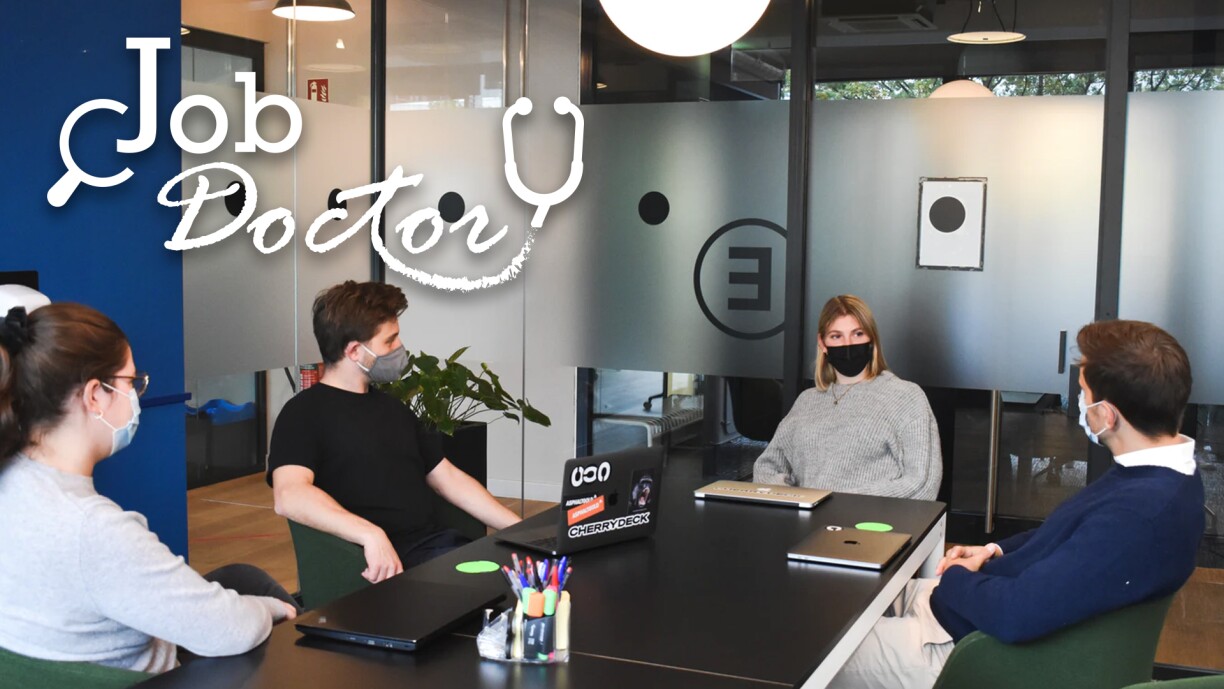
- ensure that staff members, visitors and all other persons comply with the social distancing guidelines set out by the government,
- impose the use of face masks where and whenever possible,
- provide masks and hydro alcoholic gel to staff members, visitors and all other persons,
- encourage the further increase of the frequency of hand washing and surface cleaning,
- use of screens or barriers to separate people from each other,
- avoid crowded office spaces,
- use back-to-back or side-to-side working (rather than face-to-face) whenever possible,
- ensure regular ventilation of working spaces with fresh air,
- etc.
Should the employer comply with the above-mentioned legal requirements, the employee has to come back to work in order to avoid any act of insubordination which may ground a disciplinary sanction or a dismissal.
In the situation where the employee considers that the employer does not meet the legal requirements and does not make any reasonable effort to ensure the safety and health of the employee, this latter may consider his/right right of withdrawal. Please be reminded that this right is to be handled with care. It can only be invoked in case of a proven serious and immediate danger which cannot be avoided (article L.312-4 of the Luxembourg Labour Code). A proven danger would be, for example, a concrete case of contamination of an employee on the company's premises without sanitary cleaning measures being taken. According to current scientific knowledge a risk related to public transportation does not seem to satisfy the conditions of article L.312-4 of the Labour Code.
We advise an employee who considers that the necessary health measures are not being taken by his/her employer to inform the person in charge of the sanitary measures in the company, the staff delegate for security and health (article L-414-14 of the Luxembourg Labour code) and/or the Inspection du Travail et des Mines (ITM).
If the employee contracts covid-19 at his place of work and it is held that the illness was the result of a lack of caution or prudence on the part of the employer, the employer may be sued by the employee and might be condemned to pay damages.
Based on the above, the employer is entitled to force employees to work from the office and stop home working. Nevertheless, it might be wise, for the employer, to pay attention to the request of employees and find an acceptable compromise in order to avoid any absence for medical reasons.
Beyond the application of teleworking in the context of a health crisis, it is the question of teleworking in general that arises today. If you wish to continue to benefit from teleworking measures, a frank dialogue must be established with your employer. Successful teleworking is based on trust.
This discussion must be prepared in order to avoid arguments that are not admissible in a professional context. Start by assessing your situation, whether your tasks can be carried out remotely, assess your personal capacity to take on this new organisation, etc. You can demonstrate the productivity, motivation and time saving benefits of teleworking.
The most important thing will be to reassure your employer about your ability to do your job.
To do so, you can offer to set up teleworking for a trial period. This period can be half the week in the office and the other half in teleworking for example. Make sure you respect working hours, ensure total availability during working hours, be contactable by your colleagues, etc.
However, for cross-border commuters, even if the bilateral tax agreements are extended until 31 December 2020, the tax constraints will continue to apply unless agreements are reached.
The spread of teleworking is a social change that employers need to grasp by defining a new working framework and reinventing the way they manage their employees.
-------------------
Anne Charton and Pierre Reuter
Darren Robinson is the Managing Partner at Anderson Wise, an independent local recruitment firm in Luxembourg. www.andersonwise.com





