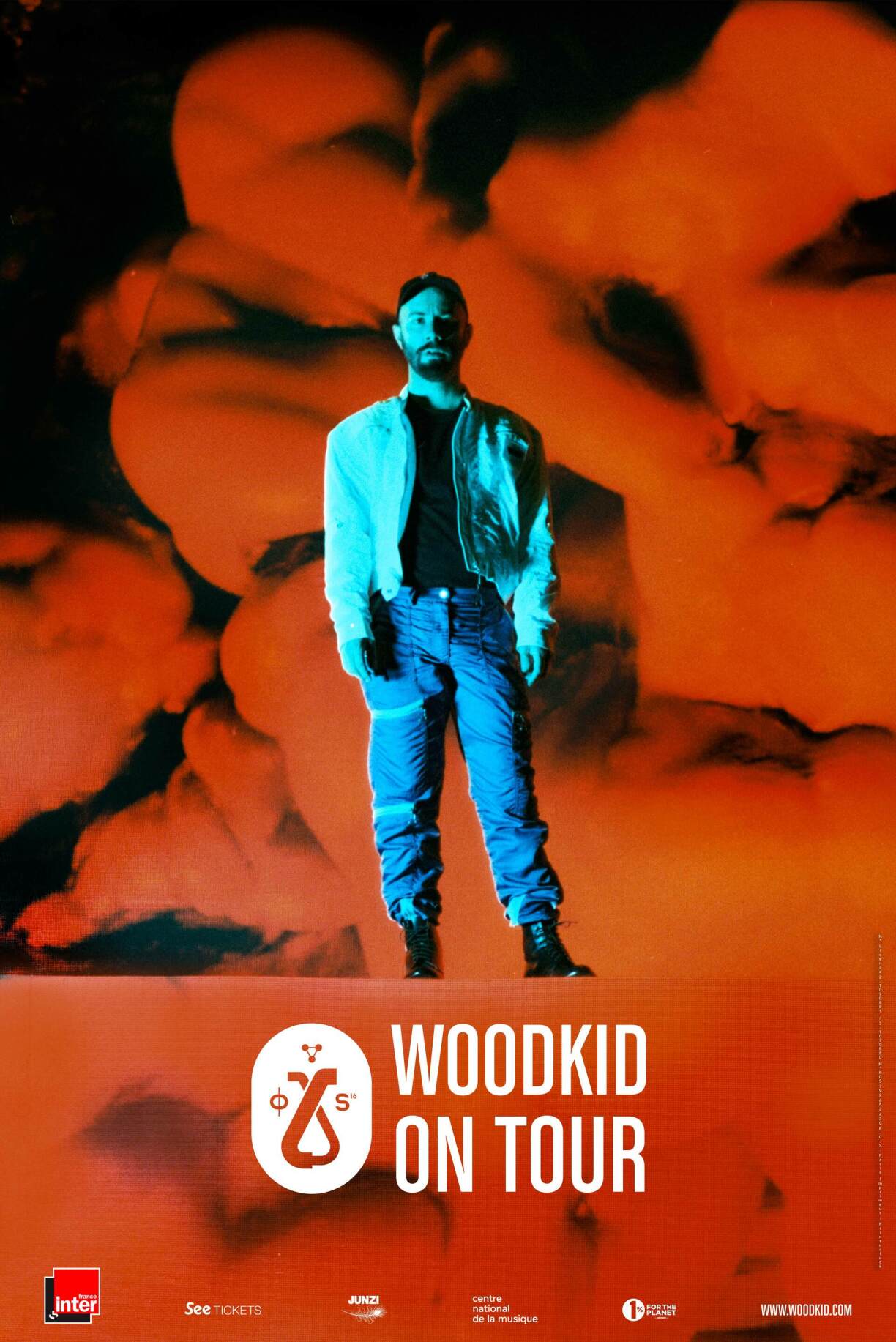
Yoann Lemoine, who goes by the stage name Woodkid, spoke to me over the phone, patiently giving me an extra five minutes while I juggled multiple jobs. He then caught me up on all his latest news, discussing the tour, how he taps into different creative energies – musical and visual – and disrupting his work processes to avoid stagnation.
Alright! So, first things first, the easiest and most important thing: tell me a little bit about the work that you're doing at the moment? What do you want to highlight, what is coming out, what's happening?
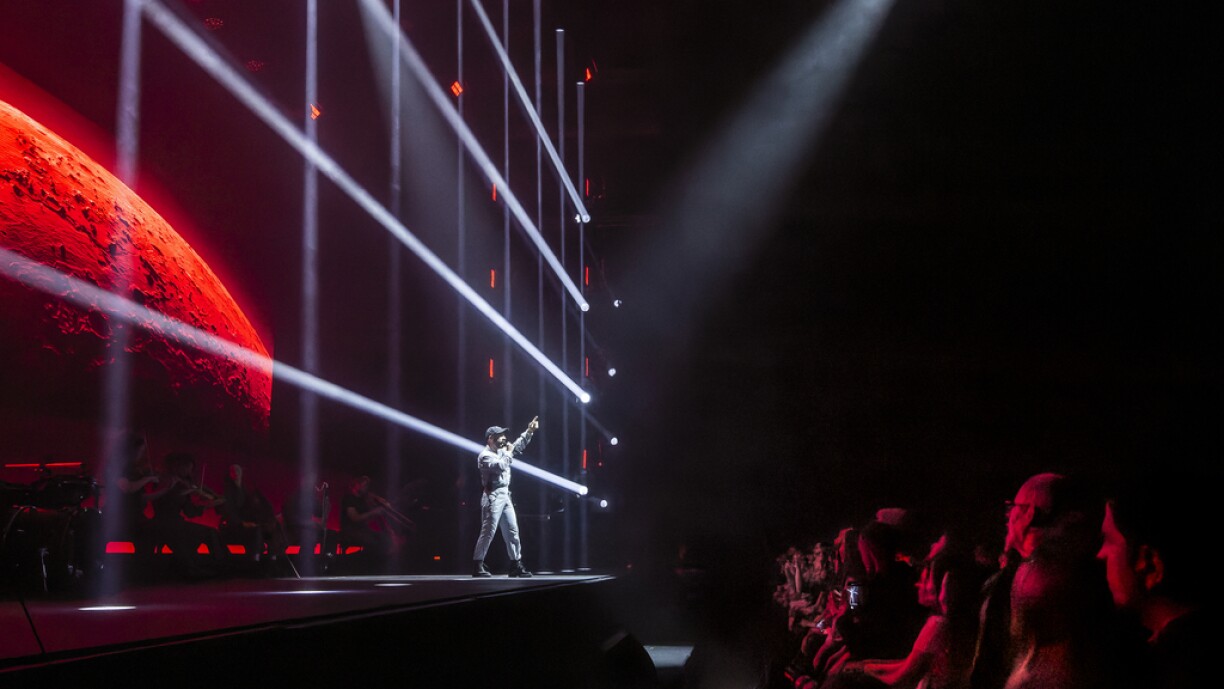
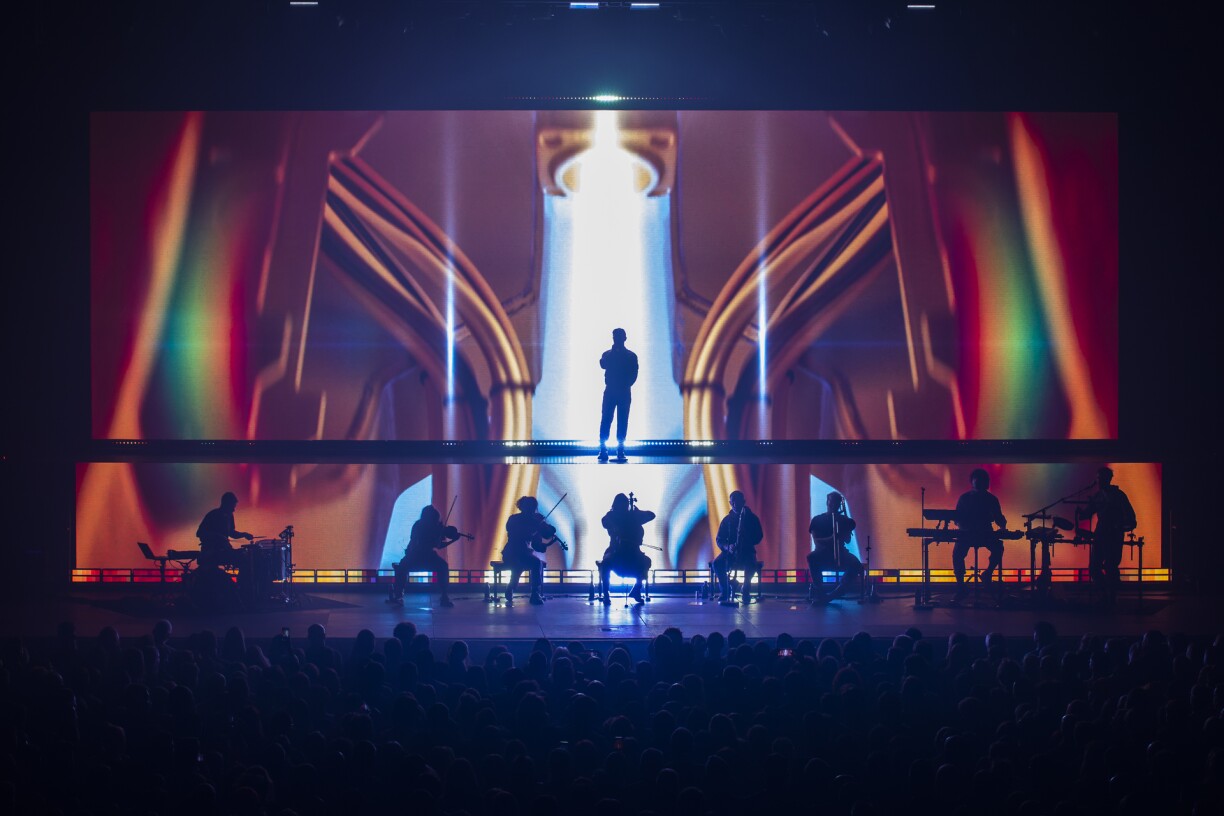
YL - Well, the main thing right now is the tour. We’ve been touring for five months, since June. This arena tour is quite exciting because we're pushing the creative a bit more, so it's a bit more technical musically, and I've been focusing a lot on my work as a creative director for my own show, which is really what takes up most of my time now.
And what's it been like touring? Obviously, there's been this pandemic (not sure if you’ve heard of it), and every musician that I’ve spoken to has talked about the difference coming back to the stage, doing live music, how exciting or nerve-wracking it is… You're going get asked this a lot, I’m sure, so I’m sorry.
YL - My case is a bit particular, because I’d had a break from touring for almost 5 years. So I just postponed the comeback a little bit, but it wasn’t a dramatic interruption of my activities, it was just about patience. The one thing that feels very good, and I'm very proud of, is that we had planned before the pandemic to release the album in 2020, and we decided to not postpone this, to not allow the curves of the pandemic to decide our schedule. So we released the album in 2020, and we started touring right when the festivals reopened in June, across Europe.
To be honest, I'm very proud because I think that people needed music, they needed to be able to go to concerts again. And the festivals needed, and still need, a lot of support, even if sometimes it was a bit difficult for the ego because we were doing, like, half the views, or half capacity. The tension was really there. It was not always easy, but I'm very proud that we were able to support the festivals.
Did you ever feel nervous at all? Everything is such a different experience now, the same, but different.
YL - Yeah, I thought that being on stage, every word, every song, every interaction with the audience would have a very special feel after this pandemic. Everything would somehow bring us back to the joy we have being onstage together after this. But also, that we would somehow always return to the pandemic. But actually, that's not the case. It's what is beautiful about live music and entertainment, that even on our side – and I hope on the public side, the audience side – in two seconds, this whole experience [the pandemic] is gone. It doesn't exist anymore. It's all about music, dancing and singing, and really I think that’s what it’s about, what life is about, to help us forget about reality somehow.
I would agree that this has renewed our focus on, and the importance of, things such as creativity, health, and taking care of yourself. The world is always moving so fast, and this really brought it to a complete standstill. Do you feel that you had any experiences, in this break, this silence, that you would not have had otherwise? Did it cause you to refocus or recalibrate how you feel about your processes, or your creativity?
YL - Well, it did change paths. In terms of shooting schedules for music videos, or touring being postponed. Even technically, in terms where I would work. But really it didn't change much, in the way that I had so much work preparing the release of the record, so I had to spend a lot of time behind my computers to work on the music, and on the on the visuals. I just took my computers and brought them home. It was honestly a little bit mundane.
I know it's been a struggle for a lot of people, and I would have loved to not have it. But postponing things a little bit, and gaining a bit of time on the record really helped me to focus on that, and to be a bit more at ease with the work that I was doing. So I used that time to create something that was a bit more developed.
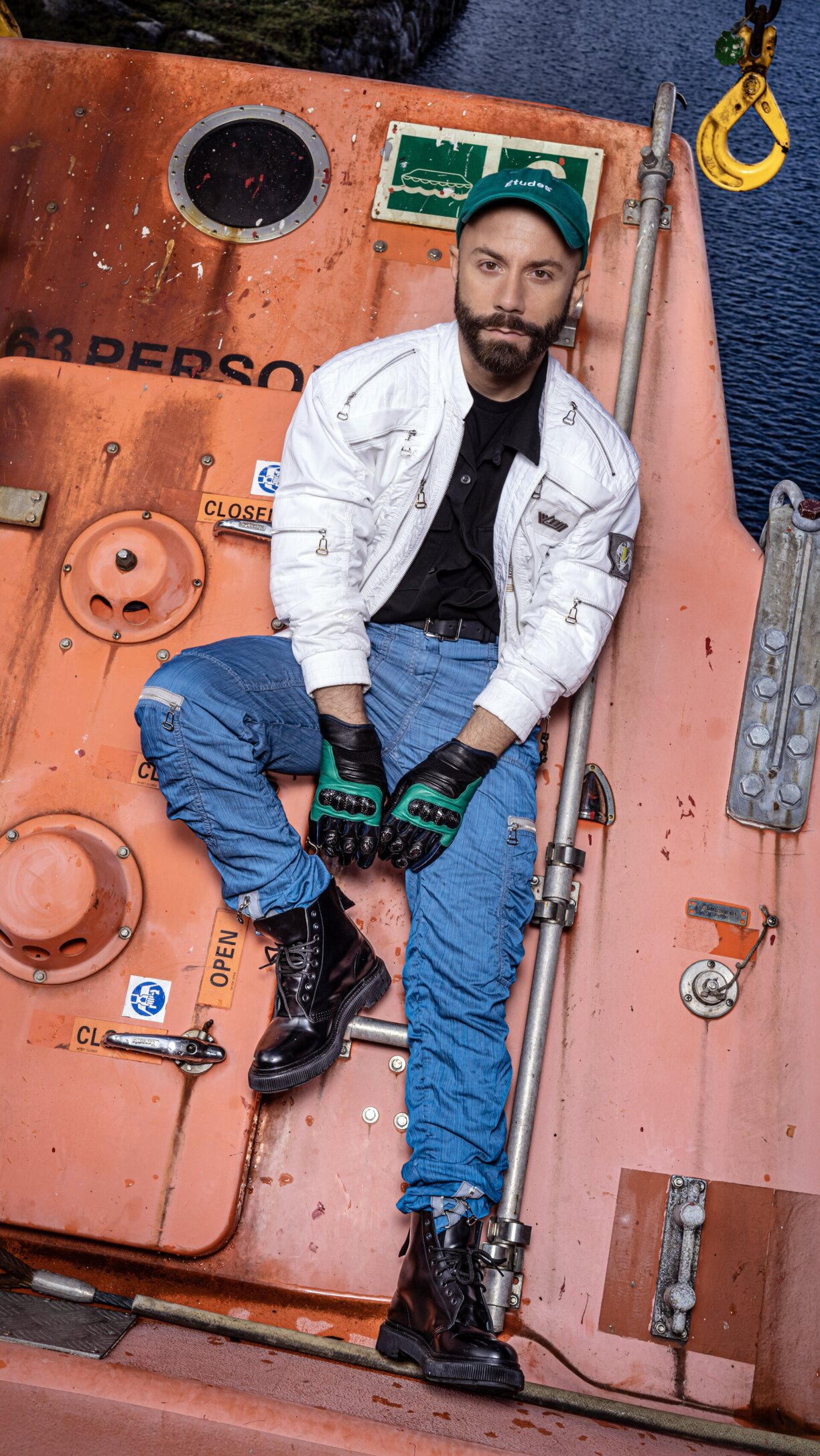
Obviously you are a visual creative as well as a sound and music creative. Could you talk us through little how one impacts the other? So, how does the art impact your music, your writing, and how does your music, or writing, impact your art? Do you conceive of one first, and the other follows or are they part of each other throughout the whole process?
YL - There's no rule, really. It depends on inspiration, and also as an artist I sometimes have strong desires for music, and when I'm tired of that then I have strong series of images. So, I move from one to another, which is why my space that I built, is designed that way, so it's like two lobes of the brain and mostly space. One side is the music, and one side is the visuals, so I can jump from one another very quickly. It helps me make the connection very fast. In one day, I can go back and forth multiple times between visuals and sound, really creatively.
Sometimes a song will start as a set of words or a little melody that I record on my laptop. And then I develop that, then some visuals come afterwards, but sometimes it's an image that triggers everything. Sometimes it's the feeling of a texture, or the feeling of a mood that triggers everything. It's very varied.
Every song on this record is probably a different example, a different configuration. Sometimes it's a chord sequence, sometimes – like the one I developed with Son Lux, Goliath – it all started from a beat. Some, like Horizons Into Battleground, start from the text, as a poem, and then I developed the music around it. So the most important thing for me, is how do these talk to each other, and how do music and visuals create a new story, because they're combined. And sometimes some of the songs that I do have no visuals.
Sometimes there's no music, sometimes it's just visual interludes or visual pieces. So it's never the same story of meeting which I'm really excited about, because I don't like to have one way of working that’s repeated.
That’s interesting because I wanted to ask you more about how you work. Do you work with repetition at all, or do you go through phases where you focus on one particular theme, and you expand multiple songs, or visuals, on that?
YL - I try to disrupt my way of working all the time, which is why this album is different from the first one. It's because I tried to not use the same mechanisms. I feel very bored and trapped easily when I feel like I'm reusing mechanisms, when I'm redoing something I've already done, it’s something that I tend to avoid all the time. So sometimes it’s about changing geographically.
Sometimes changing partnerships with people, and how you cooperate on the visual or the music side of things, like writing different stories. Moving from black and white to colour, for example or changing the pitch of my voice. My first record was very low, so here I wanted to take some risks, so I reopened my range to falsetto, and higher, clearer timbres. It's really about challenging myself all the time, and challenging my teams, too, constantly.
I love that mentioned that you sometimes change your space geographically, because our environment does really influence our inspirations. And we were talking before about how creativity is a bit of a fantasy space that we go back to recuperate. So, how do you feel about your environment, and then your creative space, are these two very separate spaces, or do they bleed into each other?
YL - They're very linked, because I spend like I would say 80% of my time, of my activity, in my studio. And more and more I have wanted to get away from it. I've been there for four or five years now, and I really enjoy being fed by inspiration and places that are very full of energy artistically. So, museums, for example, these are places that I go more and more. Whenever I go to a museum, I feel like I come back with a lot of ideas, and I feel very regenerated.
Travelling, also, always. And more and more, really just trying as much as possible, to have some music sessions that don't have a proper goal. It’s easy to just do work on this song, work on this or that, and at the end of the day you feel like you're always doing commissions, and not just doing music, and seeing what comes out of it.
More and more, I'm trying to reverse the process. I have been doing sessions without really knowing where we end it feels very good.
Okay, so also definitely being creative for the sake of being creative, rather than having an end goal!
YL - Exactly.
Woodkid plays the Abbaye Neimënster on Tuesday 12 July, 2022, tickets are available here