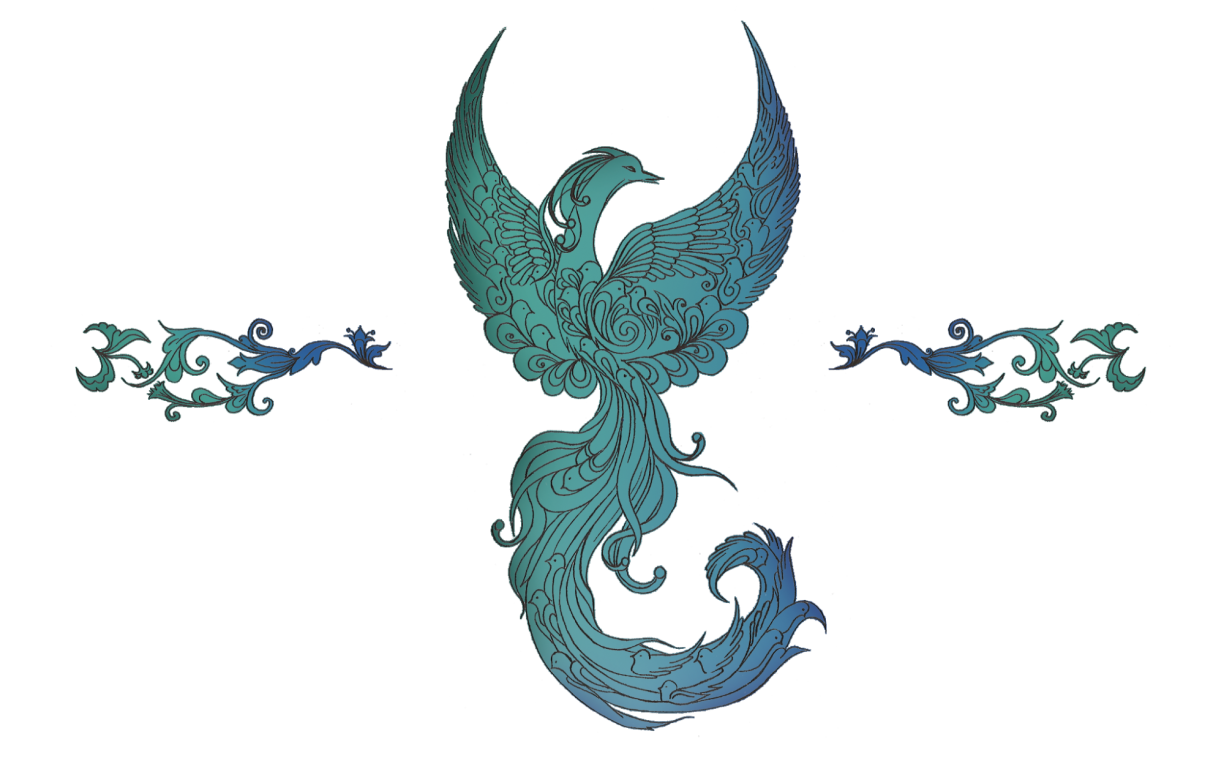
Simurgh is a giant, legendary bird from ancient Iran. She lived on a sacred tree that contained the seeds of all medicinal plants. She represents wisdom, healing, and divine mercy. Simurgh appears in many Persian stories and poems, specifically in the Shahnameh. Shahnameh (The Book of Kings) is an epic national poem written by the famous Persian poet Ferdowsi over 1,000 years ago. It tells the mythical and historical stories of ancient Iran, its legendary heroes, and great kings.
Beyond epic stories, Simurgh holds a spiritual meaning in Persian literature. The famous Persian poet Attar of Nishapur, who was from Nishapur in northeastern Iran and lived during the 12th and 13th centuries, transformed Simurgh into a mystical symbol in his poem. In Attar's story, thousands of birds traveled through seven difficult valleys to find their king, Simurgh. In the end, only thirty birds survived the journey. When they finally reached their destination and looked into a mirror, they realised that they themselves were the king they were looking for. He used the Persian wordplay where Si means "thirty" and Murgh means "bird" (Si-Murgh = Thirty Birds). Attar used this clever metaphor to show that the divine truth lies within oneself.
Here are some stories in Shahnameh in which Simurgh has come to help or guide humans:
When Zal was born with snow-white hair, his father Sam (A famous Persian hero, known for his great strength) thought it was a bad omen and abandoned him on Mount Alborz. Simurgh found the baby, felt pity for him, and raised him in her nest alongside her own chicks.
When Zal grew up, his father regretted his actions and came to take him home. Before Zal left, Simurgh gave him her magic feathers and said: "Whenever you are in deep trouble, burn a feather, and I will come to help you."'
When Zal's wife, Rudaba, was giving birth to Rostam, Rudaba's life was in grave danger. Zal was desperate so he burned a feather. Simurgh appeared immediately and taught them how to perform a surgical procedure (what we now call C-sections) to safely deliver the baby and save the mother.
During a fierce war, Rostam had to fight Esfandiyar, a prince who could not be harmed by normal weapons. Rostam and his horse were badly injured, so Zal burned another feather. Simurgh healed their wounds and revealed Esfandiyar's secret vulnerability which was his eyes. She guided Rostam to make a special two-pointed arrow from a tamarisk branch, which Rostam used to strike Esfandiyar's eyes and win the battle.
Written by Pegah Palizban & Pariya Palizban
ROUX Student Magazine is a student club at the University of Luxembourg. Everything in the magazine is 100% made by students for students and now for you :). The article you just read was featured in our Issue 31. You can find all issues digitally or grab the newest one for free physically in our monthly publication events. Contact us on instagram: @roux.magazine or email us on paper.roux@gmail.com.





