Luxembourg-born 29-year-old Isabelle Zigrand works in London at the publishing house Simon & Schuster as a Client Publishing Manager. For the avid reader, working in the book industry is a dream come true, and she firmly believes in the future of literature.
Zigrand explained that the things she misses most about Luxembourg are her family and friends, as well as the multilingual environment. She said she particularly misses speaking several languages every day, something she always enjoys again when she returns home for visits.
Around ten years ago, Isabelle Zigrand, born in 1996, decided to move abroad. She had long known that she wanted to study in an English-speaking country. As a pupil, however, she was not only fond of literature but also enjoyed numbers: at the Lycée de Garçons d’Esch-sur-Alzette she completed a science-focused "Première B", as she felt there was not enough mathematics in the literature stream, even though English was her favourite subject.
She later pursued that passion at university. In Scotland, she studied English literature and history at the University of Glasgow. Zigrand said her love of reading started early in childhood, largely influenced by her parents' own reading habits, and that interest never faded. Over time, she realised that literature and the English language could become more than just a hobby.
During her studies in Glasgow, Zigrand also spent a year at the University of North Carolina in the US. After completing her undergraduate master's degree, she continued her studies in England at Oxford Brookes University, where she completed a master's degree in publishing.
She described the programme as particularly practical. While writing her dissertation, she had already begun working full-time in the publishing industry. Her first job was with Oxford University Press (OUP), which employs around 2,000 people in the UK and roughly 6,000 worldwide.
Zigrand explained that at OUP she worked in the Rights Department, first as an assistant, later as a senior rights assistant, and eventually as a rights executive. She began working at the publisher in July 2021.
She said that in the early stages, her work mainly involved administrative tasks such as drafting contracts, gathering signatures, preparing invoices and reports, and analysing how profitable certain titles or projects were. She also prepared presentations for book launches, Zigrand said.
She added that over time she was given more responsibility and began dealing directly with clients, proposing books for translation and managing professional relationships with publishing houses abroad, including some in Luxembourg.
Despite several promotions, Zigrand decided to change jobs in June 2025. She moved from Oxford to London to join Simon & Schuster, which operates in the UK, the US, and Australia. She still lives in Reading between London and Oxford, where she shares a home with her English partner whom she met at university.
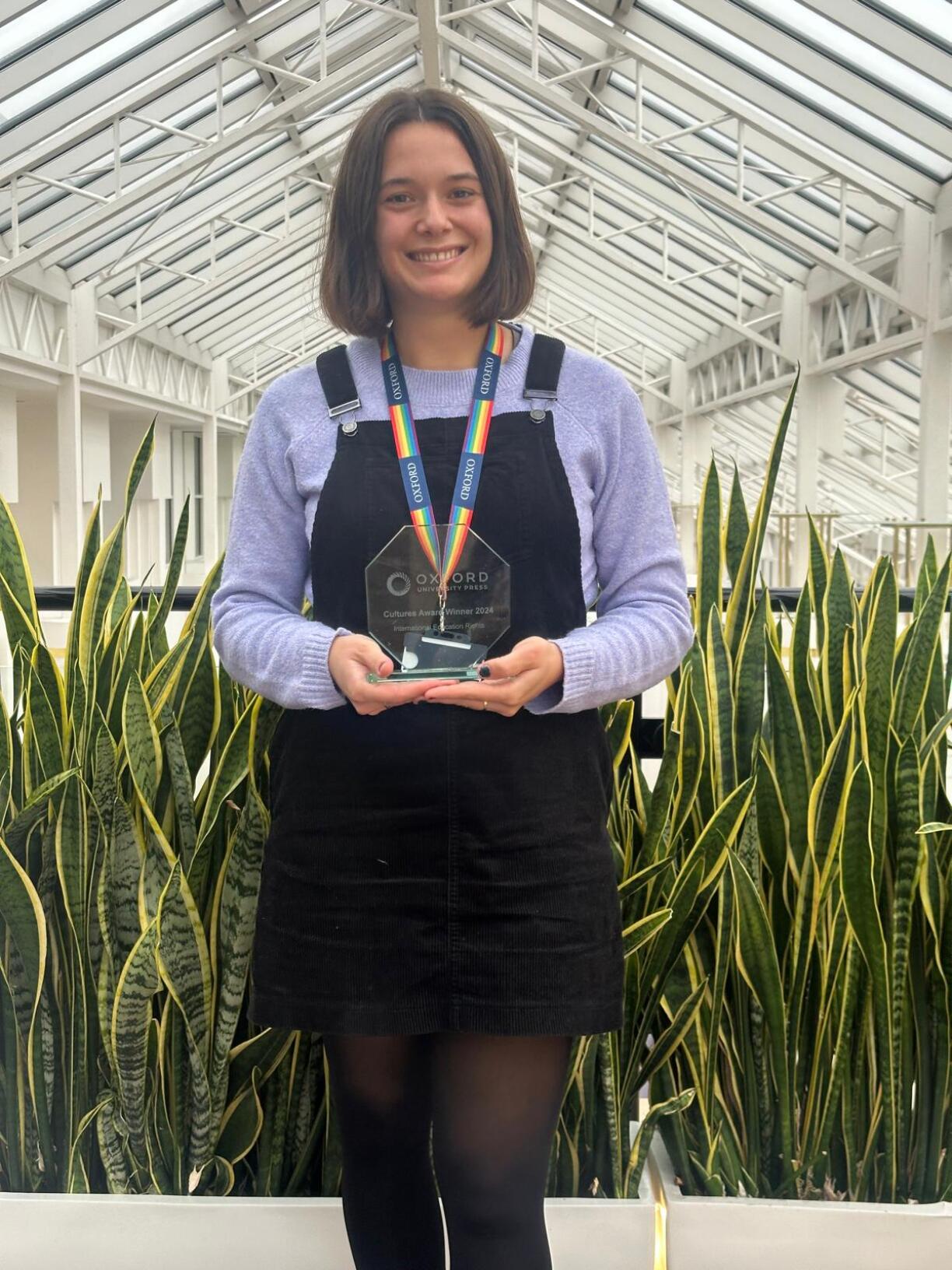
At Simon & Schuster she works as a Client Publishing Manager in a four-person team responsible for providing sales and distribution services for smaller publishers, Zigrand said.
She explained that the team sells books from partner publishers in the UK, including many American ones. These books are delivered to the company's warehouse, after which the sales team presents them to bookshops, online retailers such as Amazon, and supermarkets so that they can be stocked and sold, Zigrand said.
Simon & Schuster distributes both its own titles and those of partner publishers. Zigrand clarified that she no longer sells books directly but instead manages accounts, coordinates with colleagues, oversees stock, and monitors the overall strategy. Part of her role involves identifying publishers with promising titles that are not selling as well as expected and suggesting potential partnerships, she said.
She added that the role differs significantly from her previous position at Oxford University Press. While Simon & Schuster employs around 200 people in the UK – about ten times fewer than OUP – it is still considered one of the "Big Five" publishers in the British market, although there is a noticeable gap to the fourth-largest publisher, and in terms of overall market share the company effectively ranks around sixth place, according to Zigrand.
Zigrand said she does not regret the move. In the UK, she explained, it is common for people to change jobs in order to advance their careers, and at Oxford it would have been difficult for her to progress into a managerial role despite her promotions.
She also praised life in London, describing it as culturally vibrant and enjoyable to work in. According to Zigrand, publishing is a sector with many women, and she finds colleagues generally open, friendly, and motivated.
She noted, however, that British politeness can sometimes feel somewhat indirect, occasionally leaving her wondering how sincere certain expressions of courtesy really are, though she said this has never caused problems.
Politically, she said she is not entirely convinced by the current situation in the UK. She pointed to the growing support for the right-leaning party Reform UK as something she observes with some concern.
Regarding Brexit, she explained that the timing had worked in her favour. Although the referendum took place in 2016, it took four years before Brexit was fully implemented, she said, adding that during that period, European students like her were still able to study in Scotland without paying tuition fees.
Financial considerations played a role in her decision to study abroad, Zigrand explained. As the youngest of four siblings, she said the cost of education was an important factor, especially as studying in the UK has become significantly more expensive and administratively complex for international students since Brexit.
Because she had already been living in the UK before Brexit came into force, she was able to remain in the country. She said that if she were finishing secondary school today, however, she would probably not choose the UK as a study destination.
Despite the challenges facing the publishing sector, Zigrand remains optimistic about its future.
She noted that the British book market remains relatively strong. Although sales volumes decline slightly each year, typically by one or two percent, this is often offset by price increases, allowing the overall value of the market to remain stable.
Digital formats are becoming increasingly important, something she does not necessarily see as a threat. She pointed in particular to the rapid growth of audiobooks, describing developments in that field as especially exciting. According to Zigrand, technology may soon allow readers to switch seamlessly between reading and listening, with devices automatically recognising where they left off.
Another trend she highlighted is BookTok, a community of book influencers on TikTok. She explained that some titles achieve enormous success through this platform, while others struggle to attract attention. In her view, readers tend to concentrate on a smaller number of very popular titles, meaning that some excellent books sell poorly while others become bestsellers simply because they gain visibility online.
In that context, Zigrand believes the growth of digital formats compensates for declines in traditional print sales.
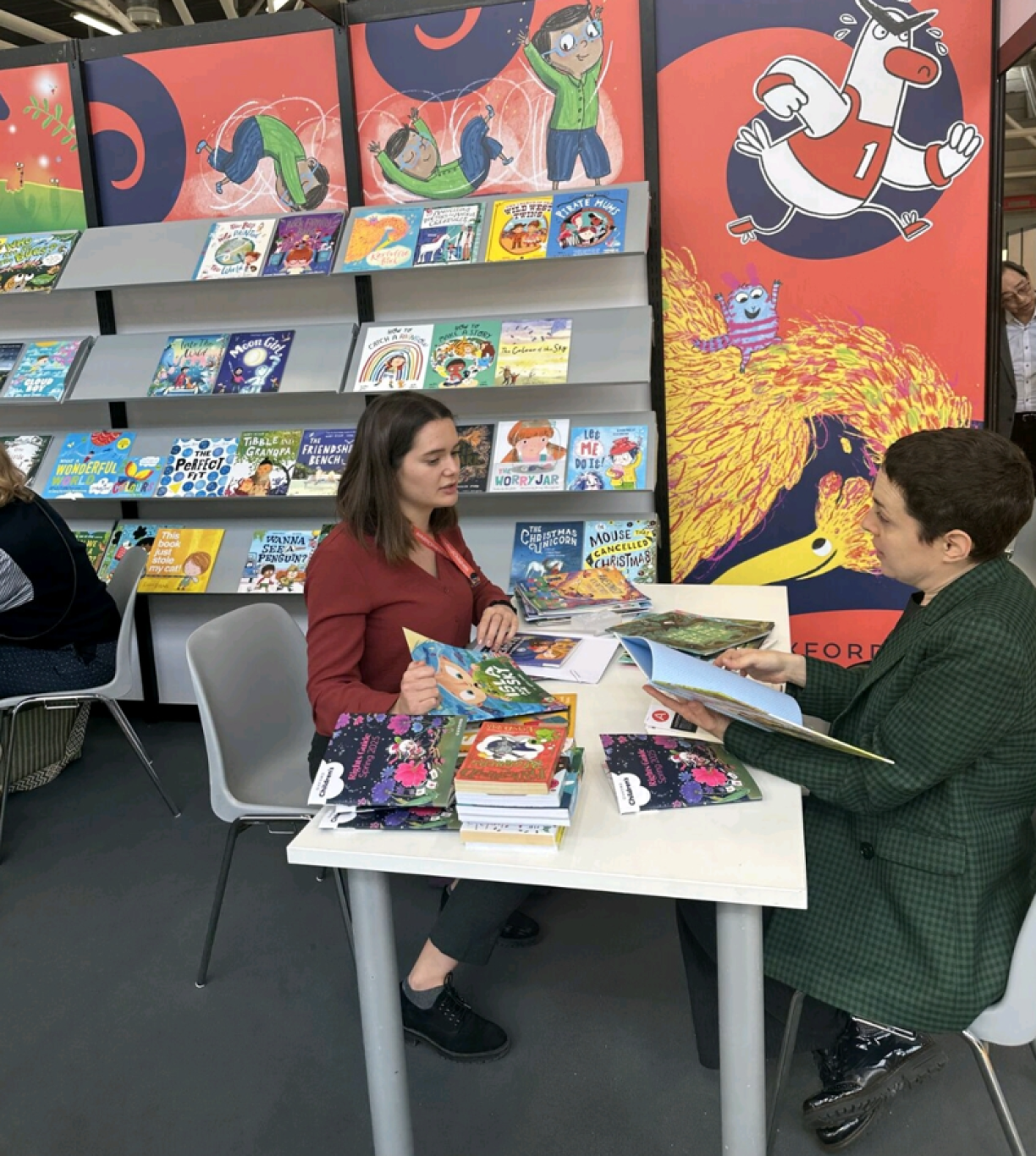
To stay connected with the industry, Zigrand recently attended the London Book Fair, which is destined for professionals in the field. Earlier in her career she travelled frequently for professional events such as the Frankfurt Book Fair and the Bologna Children's Book Fair, and she even went on business trips to Portugal and Mongolia.
Now that she no longer works directly with clients, such travel has become less frequent unless events take place close to home in London, she said.

Zigrand said she had always wanted to work with books. She is aware that publishing is a highly competitive industry, which makes her particularly grateful that she managed to secure her first position within two months of finishing her studies. She remains convinced that the global love of books is still very strong.
When asked about favourite books, Zigrand explained that her preferences vary depending on her mood. Like many readers of her generation, she grew up with Harry Potter and still enjoys fantasy, she said, adding that she also appreciates contemporary literature.
One recent favourite is Under Water by Tara Menon, which she had the chance to read before its official release, she said.
Asked about her feelings towards language and England, Zigrand said she is now as fluent in English as in Luxembourgish, and England has gradually become a second home, although Luxembourg remains her first.
She said she now feels that she has two homes: England, where she currently lives and which feels increasingly familiar, and Luxembourg, which still feels like home whenever she returns.
Zigrand also said that she visits family and friends roughly four times a year and often attends the Walfer Bicherdeeg – Luxembourg's largest annual book fair – if her schedule allows. Her friends sometimes even tease her about the slight English accent that has crept into her Luxembourgish, she said.
For the time being, however, returning permanently to Luxembourg is not something she is considering, partly because her partner speaks only English, Zigrand explained.

In England she has also taken up tag rugby, a non-contact mixed-gender version of rugby. For anyone visiting London, she recommends seeing a musical in the West End and, naturally, spending time in a traditional pub, experiences that she describes as very much part of British culture.
For the Luxembourger working in one of the world’s publishing capitals, the story of books is far from finished.





